How Montreal Winters Damage Foundations and How to Prevent It
Reading time: 14 minutes
Every November, something quietly dramatic happens beneath Montreal’s streets and homes. The temperature drops, the ground stiffens, and forces that most homeowners never think about begin their slow, relentless work on the very structures keeping families safe and warm. By the time spring arrives in 2026, contractors across the island are already booked weeks out — because another winter has left its mark.
If you own a home or property in Montreal, you’ve probably noticed the signs: a crack running along your basement wall, a door that no longer closes properly, a damp patch appearing where there was none before. These aren’t random events. They’re the predictable consequences of one of Canada’s harshest urban winter environments acting on foundations that, if left unprotected, will deteriorate year after year.
This guide is your strategic roadmap through that complexity. We’ll break down exactly why Montreal winters are so particularly punishing, what physical processes cause damage, how to read the early warning signs, and — most importantly — what you can actually do to protect your investment.
Table of Contents
- Why Montreal Is a Uniquely Hostile Environment for Foundations
- The Core Damage Mechanisms: What’s Actually Happening
- Reading the Warning Signs Before It’s Too Late
- Proven Prevention Strategies That Actually Work
- Real-World Case Studies from Montreal Homeowners
- Cost Comparison: Prevention vs. Repair
- Freeze-Thaw Cycle Impact by Foundation Type
- Frequently Asked Questions
- Your Winter-Ready Foundation Roadmap
Why Montreal Is a Uniquely Hostile Environment for Foundations
Montreal doesn’t just get cold — it gets cold in a particularly destructive way. The city experiences an average of 35 to 45 freeze-thaw cycles per winter season, according to data from Environment and Climate Change Canada. That number is critical, because it’s not simply sustained cold that damages foundations — it’s the repeated transition between freezing and thawing that generates the mechanical stress capable of fracturing concrete, displacing soil, and compromising waterproofing membranes.
In January 2025, Montreal recorded temperatures swinging from -24°C to +4°C within a 72-hour period — a textbook recipe for foundation stress. In 2026, early forecasts from Environment Canada suggest similar volatility, with La Niña conditions contributing to erratic temperature patterns across Quebec.
The city sits on a complex mix of clay-heavy soils, particularly in areas like Laval, the Plateau, and NDG. Clay is notorious among geotechnical engineers for its frost susceptibility. It retains water efficiently, which means when temperatures drop, that water expands — and it does so with extraordinary force. The pressure generated by freezing water within soil can exceed 2,000 kilopascals, far beyond what most residential foundation walls are designed to resist passively over decades.
“Montreal’s freeze-thaw regime is among the most aggressive in any major North American city. Homeowners often underestimate how cumulative this stress becomes over 20 or 30 winters.” — Dr. Réjean Duguay, Structural Engineering Professor, École Polytechnique de Montréal
Add to this the weight of snow accumulation pressing against above-grade foundation walls, the hydraulic pressure of snowmelt infiltrating improperly graded soil, and the legacy of aging housing stock — roughly 42% of Montreal’s residential buildings predate 1960 — and you have a foundation damage problem that is both widespread and, in many cases, preventable.
The Core Damage Mechanisms: What’s Actually Happening
Frost Heave: The Invisible Upward Force
Frost heave is the phenomenon most responsible for foundation movement in Montreal. When water in soil freezes, it doesn’t simply solidify in place — it migrates. Capillary action draws liquid water from deeper, unfrozen soil toward the freezing front, where it accumulates and freezes in horizontal ice lenses. These lenses grow perpendicular to the direction of heat flow, which typically means they push upward against whatever structure is above them.
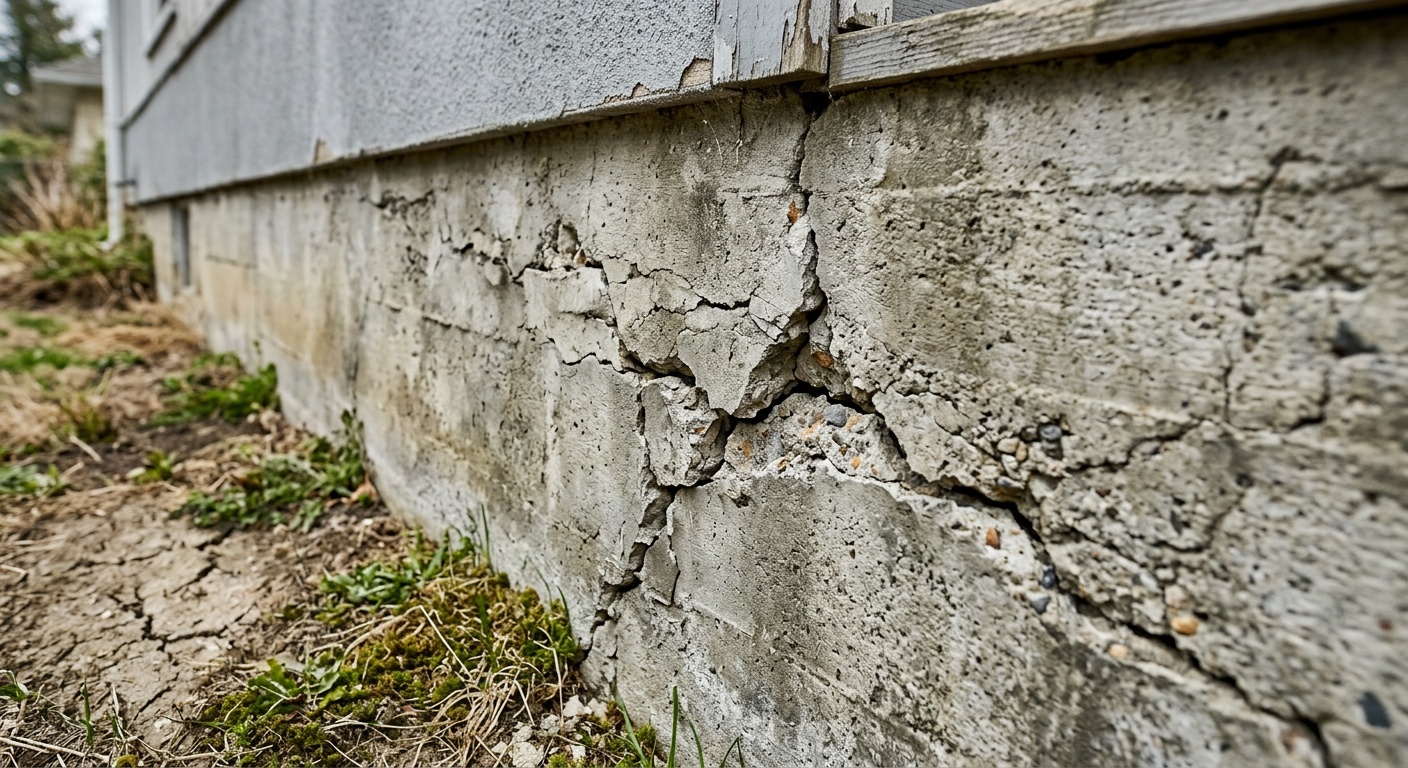
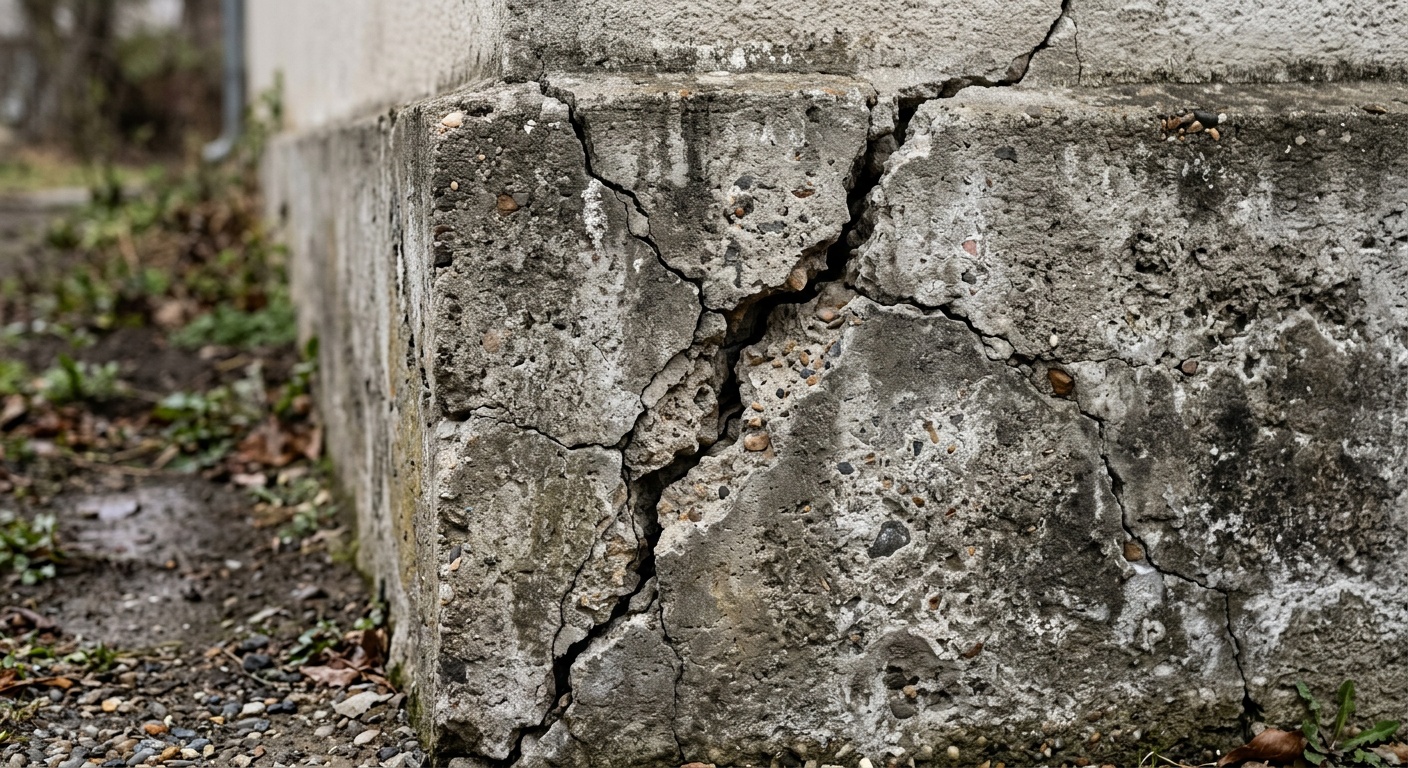
For a Montreal home with a basement foundation, this means the footing — the concrete pad at the base of your foundation wall — can be physically lifted. When one section of footing heaves more than another, differential movement occurs. That’s when you see diagonal cracks at the corners of basement windows, stair-step cracking in block foundations, or doors and windows that suddenly jam.
Frost heave is worst when three conditions coincide: frost-susceptible soil (clay or silt), an available water source (poor drainage, high water table), and temperatures that fluctuate around the freezing point. Montreal checks all three boxes regularly between November and March.
Freeze-Thaw Spalling and Concrete Deterioration
Concrete itself is vulnerable to freeze-thaw cycling, particularly in older Montreal homes where the mix design may not have included air-entraining agents — a standard protective measure in modern construction. When water penetrates the porous surface of concrete and then freezes, it expands by approximately 9% in volume. This expansion creates internal pressure that, over repeated cycles, causes the surface layer to flake and pop off in a process called spalling.
Spalling is more than cosmetic. Once the outer protective layer of concrete is compromised, the rate of moisture infiltration accelerates, exposing reinforcing steel to corrosion and weakening the structural integrity of the wall itself. In Montreal’s post-war bungalows and duplexes — many built with poured concrete or concrete block foundations — spalling is one of the most common complaints contractors handle each spring.
Hydrostatic Pressure and Water Infiltration
Snowmelt in Montreal arrives fast and in large volumes. The city averages 210 cm of snowfall annually, and when that snow melts — particularly during rapid warm spells — the soil surrounding foundation walls becomes temporarily saturated. Water follows the path of least resistance, and if that path leads through a crack, a failed waterproofing membrane, or an improperly sealed window well, it ends up in your basement.
Hydrostatic pressure — the lateral force exerted by waterlogged soil against a foundation wall — is not to be underestimated. A wall retaining saturated clay soil can experience lateral pressures significant enough to cause bowing or inward cracking, particularly in older stone or brick foundations common in neighborhoods like Rosemont, Hochelaga-Maisonneuve, and Verdun.
Thermal Bridging and Insulation Failure
Less discussed but equally important is the role of thermal bridging — areas where heat escapes from a heated basement through insufficiently insulated foundation walls to the cold exterior soil. This creates a localized zone where soil temperatures are more likely to fluctuate around freezing, effectively creating a micro-environment of repeated freeze-thaw cycling concentrated right at the foundation perimeter. Poor foundation insulation is, in this sense, not just an energy efficiency problem — it’s a structural vulnerability.
Reading the Warning Signs Before It’s Too Late
Here’s the straight talk: most serious foundation damage doesn’t happen overnight. It develops over multiple winters, and homeowners who catch the early indicators can intervene at a fraction of the cost of major remediation. Knowing what to look for — and when to look — is one of the most valuable skills you can develop as a Montreal property owner.
Early warning signs to inspect each spring:
- Hairline cracks in poured concrete walls — especially diagonal cracks emanating from corners of openings
- Stair-step cracking in block or brick foundations — a classic sign of differential settlement or frost heave
- Bowing or inward bulging of basement walls — indicates significant lateral soil pressure
- Efflorescence (white mineral deposits on concrete) — signals water has moved through the wall
- Damp spots or water staining after snowmelt events
- Gaps between foundation and sill plate — visible from inside the basement at the top of the wall
- Sticking doors and windows on the ground floor — often the first symptom noticed by homeowners
- Uneven or sloping floors above an unfinished basement
Pro Tip: Conduct your foundation inspection in late April or early May, after the frost has fully left the ground. This gives you the clearest picture of any movement that occurred during the winter. Take dated photographs each year — subtle changes become visible when you compare images across multiple seasons.
Proven Prevention Strategies That Actually Work
Drainage Management: Your First Line of Defense
The single most impactful thing most Montreal homeowners can do to protect their foundations has nothing to do with concrete patching or waterproofing membranes — it’s managing where water goes on and around their property. Poor grading and inadequate drainage are responsible for the majority of moisture-related foundation problems in residential Montreal.
Practical drainage actions you can implement this season:
- Ensure the soil grade slopes away from your foundation at a minimum of 6 inches over the first 10 feet
- Extend downspouts at least 1.5 to 2 metres away from the foundation wall
- Keep window wells clear of debris and ensure they have gravel drainage at the base
- Avoid piling snow removed from driveways or walkways directly against foundation walls
- Inspect and clean eavestroughs before the first major snowfall of the season
These measures cost little to nothing but can dramatically reduce the hydraulic pressure and water infiltration that trigger or accelerate damage. A properly graded yard redirects tens of thousands of litres of snowmelt away from your foundation each spring.
Foundation Insulation: Protecting Against Freeze-Thaw Cycling
Insulating your foundation walls serves a dual purpose in Montreal’s climate. It keeps your basement warmer (reducing heating costs), and it pushes the freezing front deeper away from the foundation, reducing the severity of freeze-thaw cycling in the immediately adjacent soil. The standard approach in 2026 is to apply rigid closed-cell foam insulation to the exterior of the foundation wall from the footing up to slightly above grade, protected by a facing material that shields it from UV exposure and mechanical damage.
Interior insulation using spray foam or rigid foam boards is a more accessible option for existing homes and still provides meaningful thermal protection, though it doesn’t address exterior moisture pathways. For comprehensive protection, exterior insulation combined with a waterproofing membrane represents best practice for Montreal conditions.
Waterproofing Systems: From Coatings to Full Drainage
Waterproofing a Montreal foundation is not a one-size-fits-all proposition. The appropriate solution depends on the age and type of your foundation, the severity of water infiltration, and your budget. Options range from relatively affordable to significant investments:
- Crystalline waterproofing coatings — applied to interior walls, these penetrate concrete and react chemically to seal capillary pores. Effective for minor seepage, typically $2,000–$5,000 CAD for a full basement in 2026.
- Interior French drain systems — a perimeter drain installed along the interior base of foundation walls, directing water to a sump pump. Addresses water that does enter but doesn’t prevent infiltration. Typical cost: $8,000–$15,000 CAD.
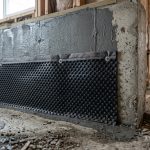
- Exterior waterproofing with drainage board — the most comprehensive solution, involving excavation around the foundation, application of a waterproofing membrane, and installation of a drainage board and weeping tile. Cost ranges from $20,000–$50,000+ CAD depending on scope, but provides the most durable protection.
Crack Repair: Addressing Damage Before It Escalates
Not all cracks are created equal, and knowing which to monitor versus which to repair immediately is important. Hairline cracks less than 0.2 mm wide in poured concrete are generally acceptable and can be sealed with flexible polyurethane caulking as a precaution. Structural cracks wider than 6 mm, horizontal cracks in block walls, or any crack accompanied by visible displacement should be assessed by a structural engineer before any repair is attempted.
Injection grouting — where polyurethane or epoxy resin is injected under pressure into a crack — is the gold standard for sealing active cracks in poured concrete foundations. It creates a flexible, waterproof seal that accommodates the minor movement inherent in Montreal’s thermally active foundations.
Real-World Case Studies from Montreal Homeowners
Case Study 1: The NDG Duplex Owner Who Waited One Winter Too Long
In spring 2025, a homeowner on Oxford Avenue in Notre-Dame-de-Grâce contacted a foundation specialist after noticing a horizontal crack running across the lower section of her block foundation wall. The crack had first appeared as a hairline in 2023 but had widened progressively each winter. By the time she acted, the wall had bowed inward by nearly 2 cm. The remediation required installation of carbon fibre straps across the affected section and partial exterior excavation to relieve soil pressure — a project that cost $22,000 CAD. Had she addressed the initial hairline crack with injection grouting in 2023, estimated cost: under $2,500.
Case Study 2: Proactive Prevention in Rosemont-La Petite-Patrie
A homeowner renovating a 1948 triplex on Beaubien Street in 2024 invested $18,000 in exterior waterproofing during the renovation, including a new drainage board, weeping tile system, and insulated foundation panels. Two subsequent winters — including the particularly volatile 2025–2026 season — produced zero basement moisture issues. Their neighbour in an equivalent property with no upgrades spent $9,000 on interior waterproofing repairs after the 2025–2026 winter alone. Long-term, the proactive investment has already paid dividends in avoided repair costs and is expected to contribute to higher property valuation at resale.
Cost Comparison: Prevention vs. Repair
| Scenario | Typical Cost (CAD, 2026) | Timeline | Disruption Level |
|---|---|---|---|
| Annual preventive inspection | $300 – $600 | 2–4 hours | Minimal |
| Crack injection (minor cracks) | $800 – $2,500 | 1 day | Low |
| Interior French drain + sump pump | $8,000 – $15,000 | 3–5 days | Moderate |
| Exterior waterproofing excavation | $20,000 – $50,000+ | 1–3 weeks | High |
| Structural foundation repair (bowing/settlement) | $15,000 – $80,000+ | 2–6 weeks | Very High |
Freeze-Thaw Cycle Impact by Foundation Type
The chart below illustrates the relative vulnerability to freeze-thaw damage for the five most common foundation types found in Montreal’s residential housing stock, based on 2025 assessments by the Association des constructeurs de maisons du Québec.
Relative Freeze-Thaw Vulnerability Index (0–100)
Source: ACMQ Foundation Vulnerability Assessment Report, 2025. Higher index = greater vulnerability.
Frequently Asked Questions
How do I know if a crack in my Montreal foundation is serious or just cosmetic?
The key indicators are crack orientation, width, and displacement. Vertical and diagonal hairline cracks (under 0.3 mm wide) in poured concrete are generally low-priority but should be sealed and monitored. Horizontal cracks in block or poured concrete walls are the most serious type, as they indicate bending stress from lateral soil pressure — these warrant immediate professional evaluation. Any crack wider than 6 mm, any crack where the two sides are at different elevations (displacement), or any crack that has grown noticeably since last season should be assessed by a licensed structural engineer or foundation specialist before winter sets in.
Is it worth waterproofing an older Montreal home, or is it better to just manage water with a sump pump?
This is one of the most common questions Montreal homeowners face, and the honest answer depends on your long-term plans for the property. A sump pump with an interior drain system manages water after it enters — it doesn’t prevent the moisture cycling that deteriorates concrete and insulation over time. For a home you plan to own for ten or more years, or one you intend to sell, exterior waterproofing is the superior investment: it stops water at the source and protects the structural integrity of the foundation wall itself. For older homeowners or those with a limited renovation horizon, a well-designed interior system combined with excellent drainage management is a pragmatic, cost-effective solution. The worst outcome is doing nothing while hoping the problem stabilizes — in Montreal’s climate, it rarely does.
When is the best time of year to do foundation repairs in Montreal?
Late spring through early fall — roughly May to October — is the optimal window for most foundation work in Montreal. The ground needs to be fully thawed for accurate assessment of movement, excavation is practical without frozen soil complications, and concrete and waterproofing membranes cure properly in above-freezing temperatures. Interior crack injection can technically be done year-round, but exterior waterproofing or any work requiring excavation should be planned for the warmer months. Given how quickly contractors book up each spring in the Montreal market, it’s wise to schedule assessments and quote requests in February or March for work that will be done in May or June.
Protecting What’s Beneath You: Your Action Roadmap
Montreal’s winters aren’t getting gentler. Climate data from 2026 shows that while average temperatures may moderate slightly over the long term, the frequency of extreme temperature swings — the very pattern most damaging to foundations — is expected to increase in the near term. That means the case for proactive foundation stewardship has never been stronger.
Here are your five clear next steps, regardless of where you are in your homeownership journey:
- Conduct a baseline inspection this spring. Walk your foundation perimeter inside and out. Document every crack, damp patch, and drainage issue with photographs. Establish your baseline — you can’t track change without knowing where you started.
- Address drainage and grading immediately. This is the highest-ROI action available to most homeowners and requires no professional help. Extend your downspouts, regrade where necessary, and commit to not piling snow against foundation walls this coming winter.
- Get a professional assessment for any cracks wider than 3 mm. Don’t guess at structural issues. A consultation with a licensed engineer or foundation specialist in Montreal costs between $400 and $800 and gives you clear, actionable information.
- Develop a 3-year waterproofing plan. If your home is pre-1975 and you’ve never done foundation waterproofing, it’s not a question of if you’ll need it — it’s when. Plan the investment across a timeframe that fits your financial situation.
- Revisit your home insurance policy. Many Quebec homeowners are surprised to discover that gradual water infiltration damage is excluded from standard coverage. In 2026, several insurers offer riders for seepage and water backup — worth reviewing before the next melt season.
The broader implication here extends beyond your own property. Montreal’s housing stock is aging, and the cumulative cost of deferred foundation maintenance across the island runs into hundreds of millions of dollars annually. Homeowners who take a strategic, proactive approach aren’t just protecting their individual investment — they’re contributing to the resilience of their entire neighbourhood.
Here’s the thought worth sitting with: The foundation beneath your home has been doing its job quietly, winter after winter, often for decades. How much longer are you prepared to leave its fate entirely to chance — and to the mercy of the next freeze-thaw cycle?