Choosing a Reliable Waterproofing Contractor in Montreal, Quebec: The Complete 2026 Guide
Reading time: 14 minutes
Your basement is showing cracks. There’s a faint musty smell after every rainstorm. Or maybe you’ve already spotted the tell-tale white mineral deposits creeping across your foundation wall. Whatever brought you here, you already know one thing: water and your home are not friends. In Montreal’s uniquely brutal climate — where freeze-thaw cycles can exceed 80 times per year and spring snowmelt turns entire neighbourhoods into temporary flood zones — waterproofing isn’t a luxury. It’s survival.
But here’s where most Montreal homeowners stumble: they hire the wrong contractor. In 2026, the waterproofing industry in Quebec is booming, partly driven by the alarming increase in extreme weather events. That means more contractors are entering the market — some experienced, some absolutely not. Knowing how to separate the reliable professionals from the opportunists could save you tens of thousands of dollars and years of structural headaches.
This guide is your strategic roadmap. Let’s turn what feels like an overwhelming decision into a confident, informed choice.
Table of Contents
- Why Waterproofing Matters More Than Ever in Montreal (2026)
- Understanding the Types of Waterproofing Services
- Red Flags: What a Bad Contractor Looks Like
- The Vetting Checklist: How to Evaluate a Contractor
- Cost Breakdown and What to Expect in Montreal
- Real Scenarios: Two Montreal Homeowner Stories
- Contractor Trustworthiness Factors: At a Glance
- Comparing Waterproofing Methods: A Quick Reference
- Frequently Asked Questions
- Your Waterproofing Action Plan: Protecting Your Home Starting Today
Why Waterproofing Matters More Than Ever in Montreal (2026)
Montreal’s relationship with water is complicated. The city sits at the confluence of the St. Lawrence and Ottawa rivers, and its geography makes it especially vulnerable to flooding, ice damming, and hydrostatic pressure beneath foundations. In 2025, the Greater Montreal Area recorded over 340 insurance claims related to basement flooding in a single spring thaw season, according to data compiled by the Insurance Bureau of Canada. That number represents a 22% increase compared to 2023 figures.
Climate change is accelerating the problem. The spring of 2025 brought record-breaking precipitation to the island, with several boroughs — including Ahuntsic-Cartierville and Rivière-des-Prairies — experiencing localized flooding that damaged both newer and older housing stock alike. Meanwhile, Montreal’s housing market continues to pressure homeowners: a compromised foundation or wet basement can slash resale value by 10–25%, according to a 2025 Centris market analysis of the Greater Montreal real estate sector.
In short, the stakes are higher in 2026 than they have ever been. And your choice of waterproofing contractor is one of the most consequential home decisions you’ll make this decade.
The Unique Challenges of Montreal’s Built Environment
Montreal’s housing stock is famously diverse — from century-old triplex foundations built with fieldstone and lime mortar to 1970s poured-concrete bungalows and modern condominiums. Each foundation type presents different waterproofing challenges, and a contractor who specializes in one may have limited experience with another. Understanding your home’s construction era is the first step in identifying what kind of expertise you actually need.
The city’s frost depth — typically reaching 1.5 to 1.8 metres below grade — means that exterior waterproofing work requires careful timing and expertise in cold-weather construction practices. Any contractor who tells you exterior excavation can be done year-round without qualification is either uninformed or overconfident.
Understanding the Types of Waterproofing Services
Before you call a single contractor, it helps enormously to understand what kind of service you actually need. Waterproofing isn’t a monolithic industry — it encompasses several distinct approaches, each suited to different problems, budgets, and home types.
Interior vs. Exterior Waterproofing: Know the Difference
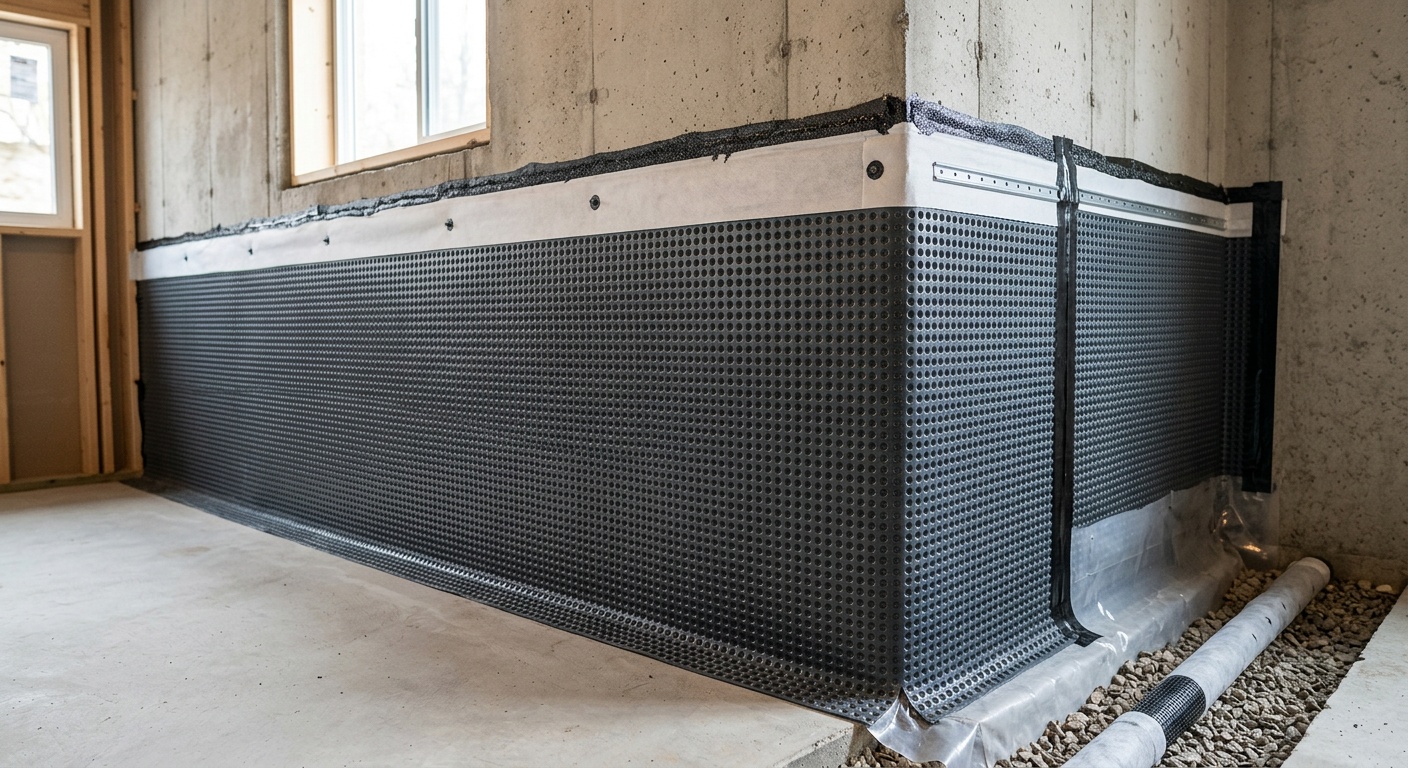
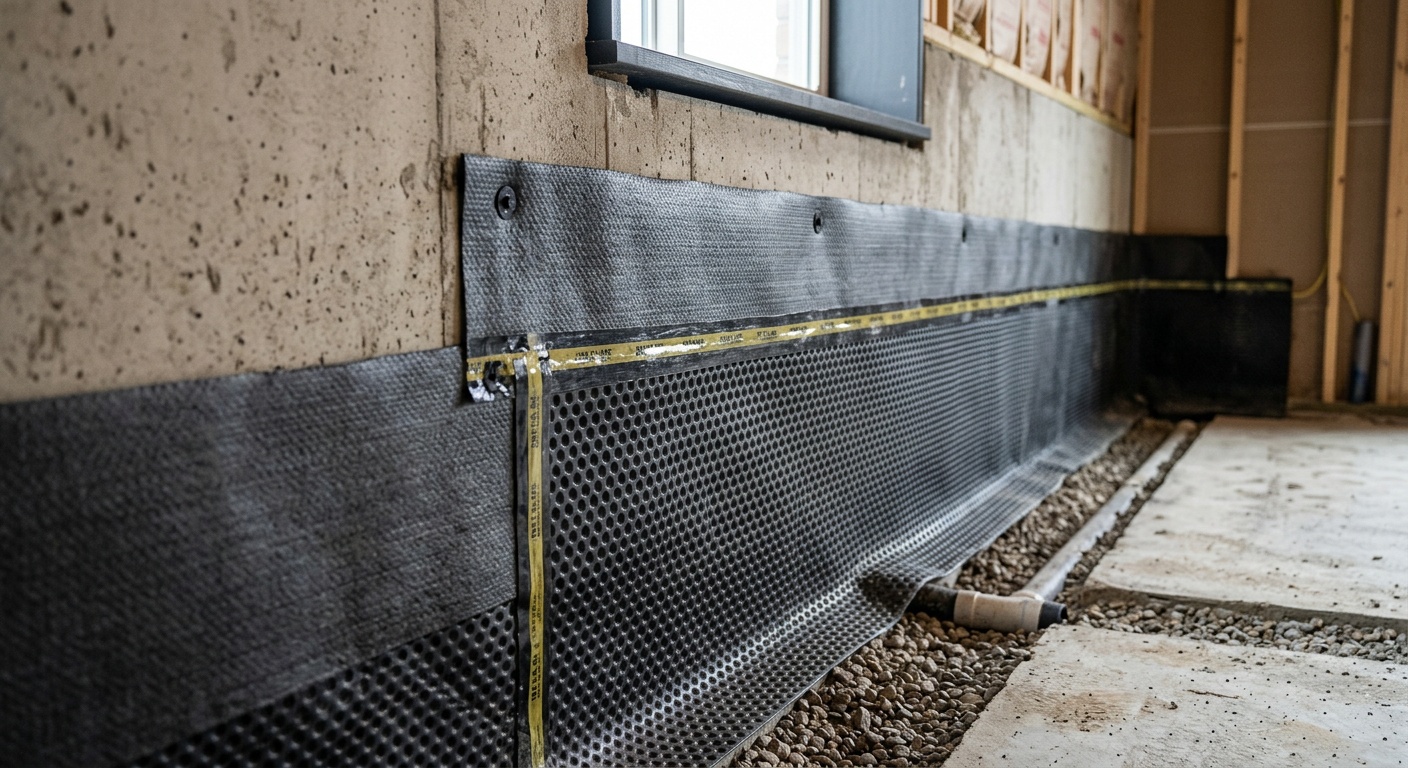
Exterior waterproofing is considered the gold standard. It involves excavating around the perimeter of your home, applying a waterproof membrane or coating directly to the foundation wall, installing a drainage system, and backfilling with gravel. The advantage? It stops water before it ever reaches your foundation. The disadvantage: it’s the most expensive option, often ranging from $15,000 to $40,000+ for a full Montreal home in 2026, and it requires significant disruption to your landscaping.
Interior waterproofing (also called interior drainage systems) works by managing water that has already entered your foundation. A weeping tile system is installed beneath the basement floor, directing water to a sump pump that expels it away from the home. This approach doesn’t stop water infiltration at the source but is highly effective at preventing damage and is considerably more affordable, typically ranging from $5,000 to $15,000 in the Montreal market.
Crack injection is a targeted repair method using polyurethane or epoxy foam injected directly into foundation cracks. It’s ideal for minor to moderate cracking and can be extremely cost-effective, ranging from $400 to $1,500 per crack depending on length and severity.
Drain tile replacement addresses failing or clogged weeping tile systems — a common issue in Montreal homes built before 1980. This can be done from the interior or exterior and is often combined with sump pump installation.
Understanding which solution your home requires isn’t something a contractor should decide for you sight-unseen. Be skeptical of any company that quotes a price or recommends a solution before conducting a thorough on-site inspection.
Red Flags: What a Bad Contractor Looks Like
In a booming market, opportunistic contractors proliferate. Here’s the straight talk: the Montreal waterproofing space has seen a meaningful uptick in consumer complaints filed with the Office de la protection du consommateur (OPC) in recent years. In 2025, waterproofing and foundation repair ranked among the top five categories for residential contractor disputes in Quebec. Knowing what to watch for can protect you before you sign anything.
- No RBQ license: In Quebec, any contractor performing construction or renovation work must hold a valid license from the Régie du bâtiment du Québec (RBQ). A waterproofing contractor without RBQ licensure is operating illegally and carries no consumer protection for you.
- Pressure tactics and “today only” pricing: Legitimate contractors don’t pressure you into same-day decisions. If a salesperson is pushing urgency to close a deal on the spot, walk away.
- Vague or verbal warranties: Any reputable waterproofing company offers a written warranty — typically 10 to 25 years for interior drainage systems. A warranty only communicated verbally is essentially meaningless.
- No physical business address: Door-to-door or online-only contractors with no verifiable Montreal office are a significant risk. Post-project accountability requires a traceable business presence.
- Unusually low bids: If one quote is 60% cheaper than three others for what appears to be the same scope of work, something is missing — either from the work plan or the contractor’s qualifications.
- No references or reviews: In 2026, any established contractor should have a verifiable trail of Google reviews, Houzz ratings, or references from past clients in the Montreal area. Absence of this history is a red flag.
Quick Scenario: Imagine you receive a flyer in your Plateau-Mont-Royal mailbox advertising “basement waterproofing from $1,500 — call today.” You call, they arrive within hours, conduct a five-minute inspection, and immediately start writing up a contract. Every one of the behaviours above is present. This is precisely the kind of situation that ends in a BBB complaint and a re-do job six months later.
The Vetting Checklist: How to Evaluate a Contractor
Think of hiring a waterproofing contractor like hiring a specialist surgeon — you want credentials, experience, and a track record before anyone touches your foundation. Here is a practical, actionable checklist.
Step 1: Verify RBQ Licensure
Visit the RBQ’s public online registry (rbq.gouv.qc.ca) and search your contractor by name or company. Confirm the license is active, not suspended, and covers the appropriate work category (subclass 1.1.1 for general construction or 1.6.1 for specialized foundation work). This takes three minutes and could save you years of legal headaches.
Step 2: Confirm Insurance Coverage
Request proof of liability insurance and CNESST coverage for workers. A contractor working on your property without proper insurance transfers liability to you in the event of a workplace accident or property damage.
Step 3: Get a Minimum of Three Written Quotes
Quotes should be itemized — listing materials, labour, drainage components, warranty terms, and timeline. A quote that simply says “basement waterproofing — $8,500” tells you almost nothing useful.
Step 4: Ask the Right Questions
- How many years have you been operating specifically in Montreal?
- Can you provide three recent references from clients in my borough or neighbourhood?
- What specific product brands do you use for membranes, drainage board, and sump pumps?
- Is the warranty transferable if I sell my home?
- Who specifically will be on-site doing the work — your employees or subcontractors?
Step 5: Check the Contract
In Quebec, any residential construction contract over $1,000 must comply with the Consumer Protection Act. This includes a mandatory 10-day cooling-off period from the date of signing. Ensure your contract includes a clear scope of work, start and end dates, total price, payment schedule, and warranty documentation. Never pay more than 25–30% upfront.
Cost Breakdown and What to Expect in Montreal (2026)
Pricing transparency is one of the first tests of a contractor’s integrity. Here’s what the Montreal market looks like in 2026 for the most common waterproofing services:
- Interior weeping tile + sump pump installation: $7,000–$16,000 depending on basement perimeter and accessibility
- Exterior waterproofing (full perimeter): $18,000–$45,000 depending on excavation depth, home size, and landscaping restoration
- Foundation crack injection (polyurethane): $500–$1,800 per crack
- Drain tile replacement (exterior partial): $8,000–$20,000
- Window well installation: $800–$1,500 per well
- Sump pump replacement only: $600–$1,200 including installation
Montreal homeowners should also be aware of available financial assistance. In 2026, certain Montreal boroughs continue to offer subsidies for flood-proofing improvements through the Programme de protection de bâtiment contre les inondations (PPBI). Eligibility varies by borough and flood-zone designation — always ask your contractor if they’re familiar with available programs, as experienced local contractors typically stay current on subsidy availability.
Real Scenarios: Two Montreal Homeowner Stories
Scenario A: The Rosemont Duplex Owner Who Got It Right
Marie-Hélène, a property owner in Rosemont–La Petite-Patrie, noticed efflorescence (white chalky deposits) along her duplex’s basement foundation wall in the fall of 2024. Rather than panic, she did her research. She obtained four quotes, verified each contractor’s RBQ license, and asked for references in her borough specifically. She chose a contractor who had been operating in Montreal for over 18 years, provided a 15-year transferable written warranty, and used a named-brand drainage board system. The interior drainage installation took four days and cost $11,200. By spring 2025, her basement remained completely dry through one of Montreal’s wettest thaw seasons on record. Her property was reassessed favourably, and when she refinanced in early 2026, the dry, finished basement added measurable value to her appraisal.
Scenario B: The NDG Homeowner Who Learned the Hard Way
Compare that to Daniel, a homeowner in Notre-Dame-de-Grâce who hired the first contractor who responded to his urgent call after a 2024 spring flood. The contractor had no verifiable RBQ license, offered a “lifetime guarantee” verbally, and completed the work in a single day at a suspiciously low price. By fall 2024, the basement was leaking again — this time worse than before. The contractor was unreachable. Daniel had to hire a second, legitimate company to redo the work entirely, ultimately spending nearly double what the proper job would have cost initially. His OPC complaint is still in process as of early 2026.
These two stories aren’t hypothetical extremes — they reflect patterns seen regularly across Montreal’s residential waterproofing market. The difference between them was preparation, verification, and patience.
Contractor Trustworthiness Factors: At a Glance
The following chart illustrates the relative weight that Montreal home inspectors and waterproofing industry experts assign to key contractor evaluation criteria, based on a 2025 survey of 120 Quebec residential construction professionals.
Key Factors in Evaluating a Waterproofing Contractor (Importance Rating %)
Source: 2025 Quebec Residential Construction Professional Survey (n=120)
Comparing Waterproofing Methods: A Quick Reference
| Method | Best For | Avg. Cost (2026 MTL) | Disruption Level | Typical Warranty |
|---|---|---|---|---|
| Exterior Waterproofing | Severe infiltration, older homes | $18,000–$45,000 | Very High (excavation) | 10–25 years |
| Interior Drainage System | Chronic seepage, most basements | $7,000–$16,000 | Moderate | 10–15 years |
| Crack Injection | Isolated cracks, poured concrete | $500–$1,800/crack | Low | 5–10 years |
| Drain Tile Replacement | Aging/failed weeping tiles | $8,000–$20,000 | High | 10–20 years |
| Sump Pump Installation | Complement to drainage systems | $600–$1,200 | Low | 1–5 years (equipment) |
Frequently Asked Questions
Do I need an RBQ-licensed contractor specifically for waterproofing in Quebec?
Yes — unequivocally. In Quebec, any contractor performing construction, renovation, or repair work on a building must hold an active RBQ (Régie du bâtiment du Québec) license in the appropriate category. Waterproofing that involves excavation, drainage installation, or structural crack repair falls clearly within this requirement. Hiring an unlicensed contractor doesn’t just void consumer protections — it can also impact your home insurance coverage if damage occurs during or after the work. Always verify license status directly on the RBQ public registry before engaging any company.
How long does a typical basement waterproofing project take in Montreal?
Project timelines vary significantly by method and scope. A crack injection repair can often be completed in a single afternoon. An interior drainage system installation for an average Montreal home — typically 1,000 to 1,500 square feet of basement perimeter — generally takes three to five working days. Exterior excavation projects are the most time-intensive, often requiring one to two weeks for a full-perimeter job, plus additional time for landscaping restoration. Seasonality also matters: exterior work is typically restricted to the frost-free season (late April through October), while interior work can proceed year-round.
What warranty should I expect from a reputable waterproofing contractor in Montreal?
Industry standards in 2026 place reputable interior drainage system warranties in the 10–15 year range, while exterior waterproofing warranties typically run 10–25 years depending on the system and materials used. Equally important: the warranty should be written, transferable to future owners, and clearly define what is and isn’t covered. Watch out for “lifetime warranties” from small or newer companies — if the business closes, the warranty disappears with it. A warranty is only as good as the company standing behind it, which is another reason why contractor longevity and reputation in the Montreal market matter so much.
Your Waterproofing Action Plan: Protecting Your Montreal Home Starting Today
You now have the knowledge. What matters next is what you do with it. As climate pressures intensify and Montreal’s housing market continues to reward well-maintained properties in 2026, the decision to address waterproofing proactively — and to do it right the first time — is both a protective and a financial investment in your home’s future.
Here is your five-step action plan to move forward with confidence:
- Assess your symptoms honestly. Walk your basement perimeter after the next heavy rain. Document cracks, moisture, efflorescence, or musty odours. Photos and notes will help contractors accurately assess your situation — and help you evaluate whether their diagnosis matches what you observed.
- Verify before you invite. Before booking any in-home assessments, check each prospective contractor’s RBQ license status and Google/Houzz reviews. Shortlist only those with verifiable local presence and a minimum of five years of Montreal-area operation.
- Get three itemized quotes minimum. Never accept a verbal or vague estimate. Require written, line-item proposals that specify materials, methods, timelines, and warranty terms. Compare apples to apples.
- Check for borough subsidies. Contact your borough office or visit montreal.ca to determine whether your address qualifies for the PPBI flood-proofing subsidy program or any 2026 climate adaptation grants. This step alone could reduce your out-of-pocket costs substantially.
- Review the contract carefully before signing. Use your 10-day cooling-off period. If possible, have a lawyer or trusted advisor review any contract over $5,000. Never pay the full amount upfront — a reasonable deposit is 25–30%, with the balance due upon satisfactory completion.
As Montreal continues adapting to the realities of a changing climate, the homes that will hold their value — and their structural integrity — are those whose owners made smart, informed decisions today. The waterproofing contractor you choose isn’t just fixing a leak. They’re helping you protect what is likely your most significant financial asset through whatever this city’s weather decides to throw at it next.
So here’s the question worth sitting with: When the next major spring thaw arrives in Montreal, will your basement be a liability or a foundation of confidence? The answer starts with the contractor you choose — and that choice begins with everything you’ve just learned.