How Waterproofing Adds Resale Value to Your Montreal Property
Reading time: 12 minutes
You’ve just received an offer on your Montreal home—exciting, right? Then the inspector’s report comes back, and three words send chills down your spine: water infiltration detected. Suddenly, the deal is wobbling, buyers are asking for a $40,000 price reduction, and your dream sale is turning into a negotiating nightmare. Sound familiar?
Here’s the straight talk: In Montreal’s real estate market, a dry basement and a properly waterproofed foundation aren’t just nice-to-have features—they are among the most powerful value-protection investments you can make as a homeowner. With climate patterns intensifying and buyers becoming increasingly sophisticated in 2026, waterproofing has moved from a remediation expense to a strategic asset-building decision.
Whether you’re planning to sell within the year or simply want to protect your investment for the long term, this guide walks you through exactly how waterproofing transforms your property’s market position, dollar by dollar.
Table of Contents
- Why Montreal Properties Are Uniquely Vulnerable
- The ROI Reality: What the Numbers Actually Say
- Buyer Psychology in 2026: What Inspectors and Buyers Look For
- Types of Waterproofing and Their Value Impact
- Real-World Case Studies from the Montreal Market
- Common Challenges and How to Overcome Them
- Frequently Asked Questions
- Your Waterproofing Roadmap: Protecting Value Before You List
Why Montreal Properties Are Uniquely Vulnerable
Montreal is a city built on an island, threaded with underground waterways, and subjected to one of North America’s most punishing freeze-thaw cycles. Every winter, soil expands and contracts as temperatures swing between −25°C and brief thaws above zero. This relentless pressure is the enemy of every foundation wall in the city.
In 2025, Montreal recorded its third consecutive year of above-average spring flooding, with the Agence métropolitaine de transport and municipal authorities responding to over 4,200 residential flooding complaints between March and May alone—a 17% increase compared to 2023 figures, according to Ville de Montréal’s annual infrastructure report.
The Geology Problem No One Talks About Enough
Much of Montreal’s residential stock—particularly the iconic triplex and duplex buildings of Rosemont, Plateau-Mont-Royal, and Villeray—sits on clay-rich soil that retains moisture exceptionally well. Clay doesn’t drain; it swells. This means that even modest rainfall events create sustained hydrostatic pressure against basement walls, leading to:
- Efflorescence (white mineral deposits on walls) indicating water migration
- Spalling concrete caused by freeze-thaw cycles
- Mold colonization within 24–48 hours of moisture infiltration
- Foundation cracking from lateral soil pressure
Add to this the reality that approximately 62% of Montreal’s residential housing stock was built before 1980—according to Statistics Canada’s 2026 housing census data—and you begin to understand why waterproofing isn’t a luxury conversation. It’s a structural necessity for the majority of properties in this city.
Climate Reality Is Changing Buyer Expectations
In 2026, the conversation around climate resilience has entered mainstream real estate discourse in Quebec. The Régie du bâtiment du Québec updated its residential disclosure requirements in late 2025, now mandating that sellers disclose any known history of water infiltration going back 10 years. This regulatory shift means buyers are asking harder questions, and an undocumented water problem is more likely than ever to derail a transaction.
The ROI Reality: What the Numbers Actually Say
Let’s get into the specifics—because this is where most homeowners either make very smart decisions or very expensive mistakes.
According to a 2025 analysis by the Greater Montreal Real Estate Board (GMREB), properties that had documented, professionally completed waterproofing work sold for an average of 3.2% to 7.8% more than comparable properties with undisclosed or unresolved water issues. On a $650,000 property—the approximate median price for a Montreal detached home in early 2026—that’s a swing of $20,800 to $50,700.
Consider the investment side: a comprehensive exterior waterproofing project in Montreal, including excavation, membrane application, drainage tile installation, and backfilling, typically ranges from $15,000 to $35,000 depending on linear footage and soil conditions. Interior drainage system installation with a sump pump runs between $8,000 and $18,000. Crack injection repairs for isolated issues can be as low as $800 to $3,000.
Quick Scenario: Imagine you’re listing a Rosemont triplex at $950,000. The inspector flags a leaking foundation wall. The buyer demands a $55,000 price reduction. Instead, you had invested $22,000 in exterior waterproofing two years ago, documented it with warranty paperwork, and disclosed it proudly in the listing. Result: no price reduction, faster closing, and a cleaner deal. That $22,000 investment just saved you $33,000 in negotiation—plus the anxiety.
Comparative ROI: Waterproofing vs. Other Renovations
| Renovation Type | Avg. Cost (Montreal 2026) | Avg. Value Added | ROI % | Buyer Impact |
|---|---|---|---|---|
| Full Waterproofing System | $18,000–$35,000 | $30,000–$55,000 | ~145% | Very High |
| Kitchen Renovation (Mid-Range) | $25,000–$50,000 | $20,000–$40,000 | ~80% | High |
| Bathroom Remodel | $15,000–$30,000 | $10,000–$22,000 | ~70% | Medium |
| New Roof Installation | $10,000–$20,000 | $8,000–$16,000 | ~75% | High |
| Landscaping / Curb Appeal | $5,000–$15,000 | $4,000–$10,000 | ~65% | Medium |
Source: GMREB transaction analysis and contractor cost benchmarks, 2025–2026. ROI represents value added at point of sale relative to comparable non-waterproofed properties.
Buyer Psychology in 2026: What Inspectors and Buyers Look For
Understanding the market from the buyer’s perspective is essential for any seller making renovation decisions. In 2026, Montreal buyers are better informed, more cautious, and more likely to walk away from a property with unresolved moisture issues than at any point in the previous decade.
A survey conducted by Royal LePage Québec in Q3 2025 found that 78% of Montreal homebuyers rated “no evidence of water infiltration” as either their top or second-highest priority in a property evaluation—ranking above kitchen upgrades, bathroom finishes, and even square footage. This is a significant shift from 2020 data, where that figure sat at 54%.
“We consistently see deals collapse over undisclosed moisture problems. Buyers today almost always request a specialist inspection if there’s any doubt about the basement. A documented waterproofing system with a transferable warranty is one of the most powerful tools a seller can have.” — Marie-Hélène Côté, Certified Residential Appraiser, Montreal, 2026
The Inspector’s Checklist: What Gets Flagged
Professional building inspectors in Quebec follow the InterNACHI and AIBQ standards, and they are trained to flag even subtle indicators of water problems. Here’s what kills deals in Montreal basements:
- Efflorescence on block or poured concrete walls — a telltale sign of chronic water migration
- Staining patterns at the base of walls or around floor drains
- Musty odors indicating mold or mildew, even if not visually present
- Cracks in foundation walls, particularly horizontal cracks which suggest lateral pressure
- Peeling paint or bubbling drywall in below-grade spaces
- Absence of a functioning sump pump in properties with known high water table areas
- Improper grading around the foundation exterior
Each of these findings becomes a line item on an inspection report that buyers use as negotiation leverage. A proactive waterproofing investment eliminates these leverage points before they appear.
Types of Waterproofing and Their Value Impact
Not all waterproofing is created equal, and choosing the right system matters both for protection and for perceived value at resale. Let’s break down the primary options available to Montreal homeowners in 2026.
Exterior Waterproofing: The Gold Standard
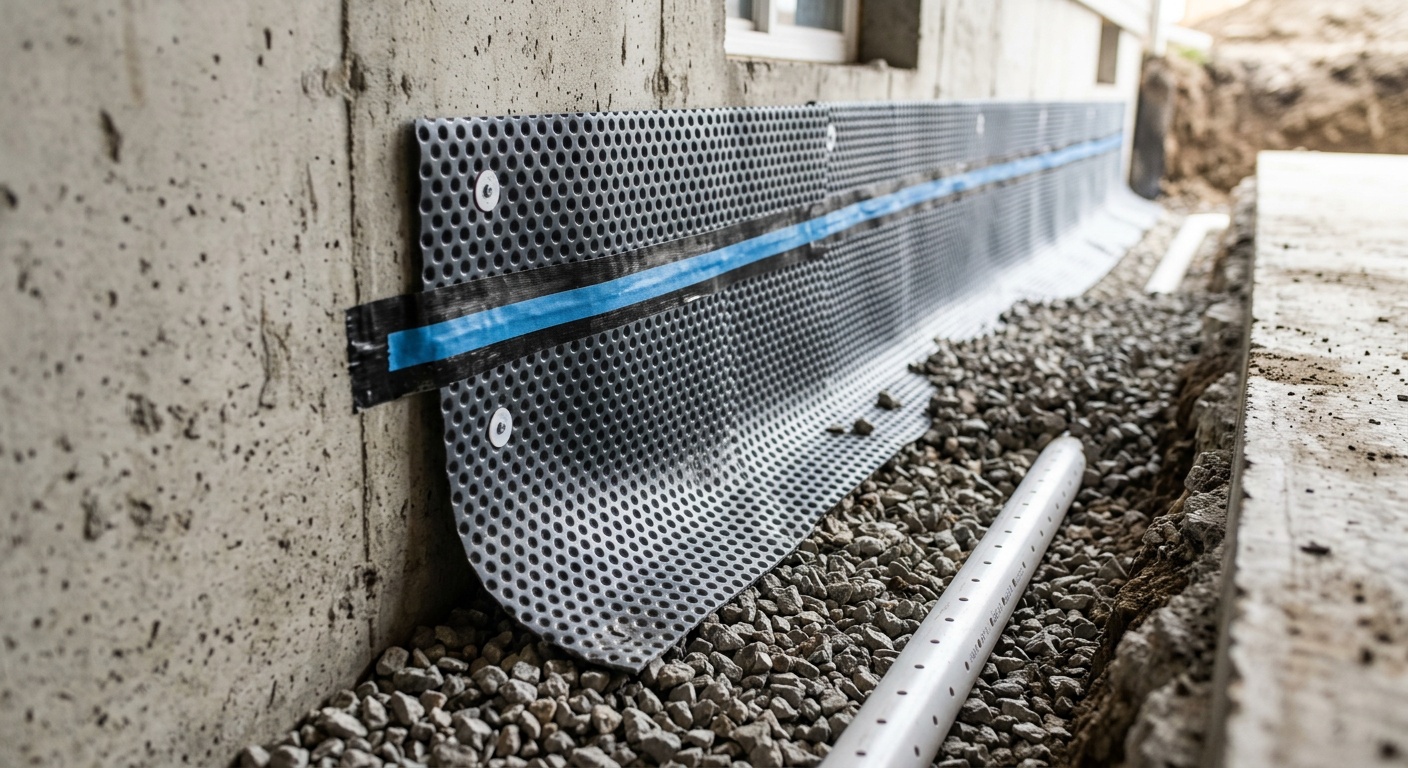
Exterior waterproofing involves excavating around the foundation perimeter, applying a waterproof membrane directly to the exterior wall surface, installing new weeping tile (drainage pipe), and backfilling with gravel to promote proper drainage. This is considered the most comprehensive and durable solution, with properly installed systems carrying warranties of 15 to 25 years—many of which are transferable to new owners.
From a resale perspective, an exterior waterproofing system with a transferable warranty is arguably the most marketable home improvement you can document. Buyers understand they’re getting protection, not just cosmetics.
Interior Waterproofing Systems
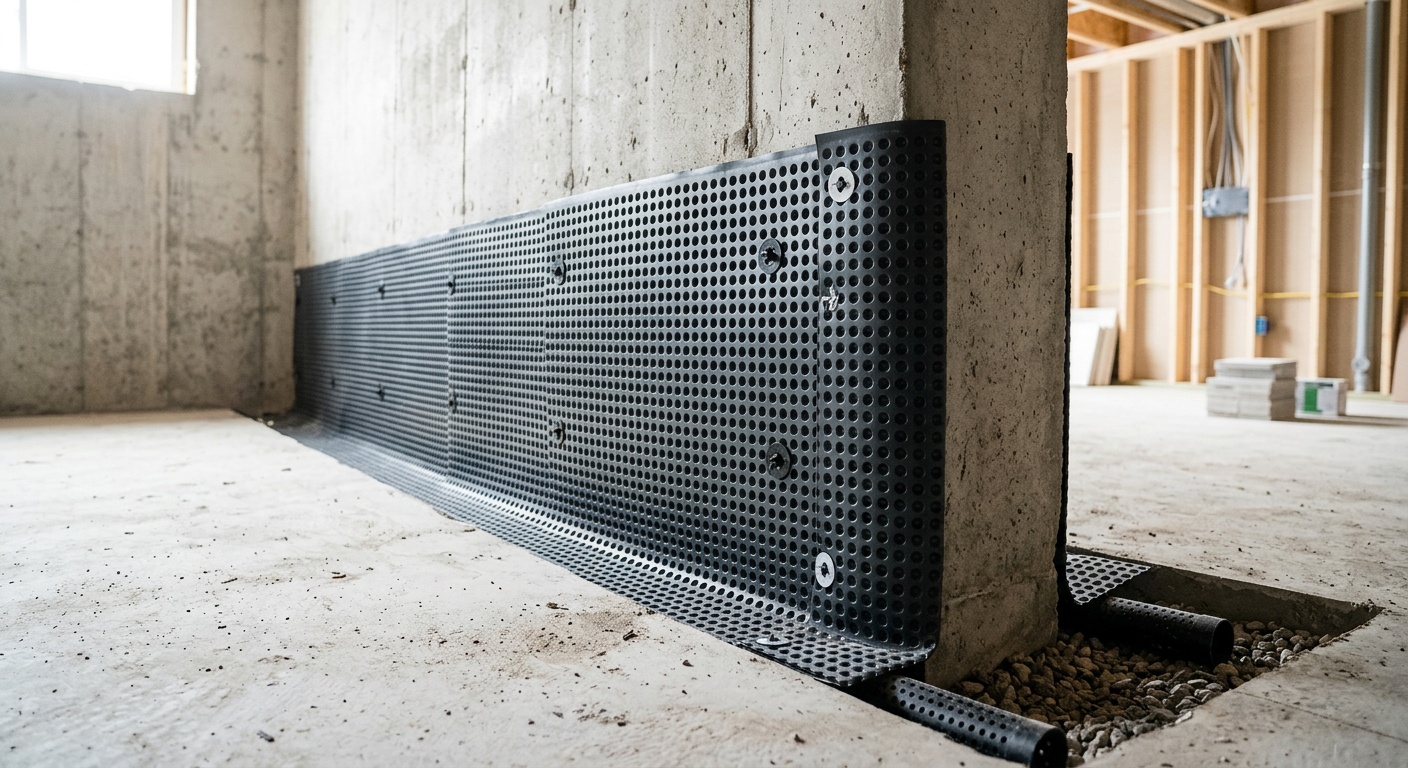
Interior drainage systems—also called interior weeping tile systems or French drain systems—manage water that has already entered the foundation by redirecting it to a sump pump and out of the home. While they don’t stop water at the source the way exterior systems do, they are highly effective, significantly less disruptive to install, and carry warranties of 10 to 20 years with reputable contractors.
In Montreal’s dense urban neighborhoods where exterior excavation is complicated by shared walls, narrow lots, or mature landscaping, interior systems are often the practical choice. They add real value, particularly when paired with a high-quality sump pump with battery backup.
Crack Injection and Targeted Repairs
For isolated cracks in poured concrete foundations—common in Montreal homes built between 1960 and 1985—polyurethane or epoxy injection offers a cost-effective targeted solution. These repairs, when properly documented, demonstrate due diligence to buyers and prevent what might otherwise become an alarming inspection finding.
Surface Sealants and Drainage Optimization
Crystalline waterproofing compounds applied to interior walls, combined with improved exterior grading and downspout extension, represent entry-level interventions. While they add modest value compared to full systems, they are worthwhile when addressing minor seepage and can be combined with other improvements.
Waterproofing Value Impact: At-a-Glance Bar Chart
Estimated resale value contribution by waterproofing type (Montreal market, 2026)
*Value contribution reflects avoided price reductions plus premium vs. comparable non-waterproofed properties. GMREB benchmarks, 2025–2026.
Real-World Case Studies from the Montreal Market
Theory is useful. Real stories are transformative. Here are two scenarios drawn from the Montreal market that illustrate exactly how waterproofing decisions play out at the negotiating table.
Case Study 1: The Verdun Duplex That Almost Fell Apart
In spring 2025, a Verdun homeowner listed their 1952-built duplex at $789,000. The property had a history of minor basement seepage that had been addressed with paint-over fixes over the years. During the buyer’s inspection, the inspector identified chronic water staining, efflorescence across two walls, and a non-functional floor drain. The buyer submitted a price reduction request of $62,000 citing remediation costs.
Rather than accept the reduction, the seller negotiated a two-week extension and engaged a certified contractor to complete an interior drainage system installation for $16,500. The work came with a 15-year transferable warranty. The buyer accepted the completed work as satisfactory, the price reduction request was withdrawn, and the property closed at $779,000—a $10,000 reduction from the original ask, compared to the $62,000 that had been demanded. Net saving through waterproofing investment: approximately $35,500.
Case Study 2: Proactive Planning in Outremont
A homeowner in Outremont planning to sell in 2026 invested $28,000 in exterior waterproofing in 2024, when they noticed seasonal dampness in their basement. They documented the process thoroughly: photos, contractor certification, warranty transfer documents, and a soil drainage assessment. When they listed in January 2026 at $1,150,000, the listing agent highlighted the waterproofing system as a feature.
The property received three offers within 12 days and sold for $1,187,000—above asking. Two of the three buyers specifically cited the peace of mind around the foundation as a deciding factor in their offer. The $28,000 investment contributed to an above-ask premium and a dramatically smoother transaction. Estimated ROI on the waterproofing investment: approximately 160%.
Common Challenges and How to Overcome Them
Waterproofing decisions don’t always come without complications. Here are three challenges Montreal homeowners commonly face—and strategic ways to navigate them.
Challenge 1: “I Can’t Afford Full Exterior Waterproofing Right Now”
This is the most common hesitation, and it’s a legitimate one. Full exterior systems are significant investments. The strategic approach here is phased waterproofing: start with the most critical interventions (crack injection, sump pump installation, drainage regrading) and document each step. Even $5,000 to $8,000 in targeted, documented repairs substantially reduces buyer risk perception and price reduction leverage. You don’t need to do everything at once—you need to demonstrate proactive management.
Pro Tip: Apply for the Programme Rénovation Québec or municipal subsidy programs. In 2025, Ville de Montréal expanded its subsidy framework for residential drainage improvements in flood-prone boroughs, with grants of up to $5,000 available for qualifying properties. Check eligibility at the borough level before investing.
Challenge 2: Shared Walls and Party Wall Complexities in Plexes
Montreal’s triplex and duplex stock creates a unique complication: shared foundation walls mean one property’s water problem is often a neighbor’s problem too. Exterior waterproofing on a shared wall requires either neighbor cooperation or interior solutions. The pragmatic answer in most cases is an interior drainage system on your side of the wall, combined with a formal written agreement with the neighboring property owner if any shared-wall work is undertaken. Document this agreement and keep it with your property file—it’s proof of responsible management.
Challenge 3: Choosing a Reputable Contractor
Quebec’s construction industry is regulated by the Régie du bâtiment du Québec (RBQ), and all waterproofing contractors must hold valid RBQ licenses. In 2026, the proliferation of renovation companies—particularly following the busy post-pandemic construction boom—means consumers must be diligent. Before hiring:
- Verify the contractor’s RBQ license number on the RBQ public registry
- Request a minimum of three references from Montreal-area projects completed within the last three years
- Confirm that the warranty is backed by a third-party insurer, not just the contractor—contractors go out of business; insurance policies don’t
- Get at least two written quotes before committing
- Ensure the contract specifies materials, installation method, drainage system type, and warranty terms in writing
Frequently Asked Questions
Does waterproofing actually increase my home’s appraised value, or just make it easier to sell?
Both—and understanding the distinction matters. A certified appraiser will factor in the absence of water damage risk and the presence of a documented, warranted waterproofing system as components of the property’s condition rating, which directly influences value. More practically, a waterproofed property avoids the price reductions that buyers demand for known or suspected water issues—which can range from $20,000 to $80,000 depending on property type and severity. In many Montreal transactions, the value of waterproofing manifests primarily as preserved asking price rather than appraised value increment, but the financial effect is equivalent.
How should I document my waterproofing work when preparing to sell?
Documentation is half the battle. Compile a waterproofing file that includes: the original contractor invoice and scope of work description, before-and-after photographs of the affected areas, the warranty certificate with clear terms and transferability language, and any RBQ license confirmation for the contractor. If your property was inspected by a structural engineer before or after the work, include that report. Present this file to your real estate broker as a selling feature—it should be referenced in your listing documentation and made available to buyer’s inspectors as part of the disclosure process.
Is it worth waterproofing if I’m selling within the next six months?
Yes, with strategic prioritization. Even with a short timeline, targeted interventions like crack injection, sump pump installation, and drainage correction can be completed in days to weeks. A documented repair—even a modest one—signals responsible ownership and removes the “unknown” factor that triggers buyer anxiety and aggressive price negotiations. If you have a known, active water issue and choose not to address it, you are legally required to disclose it under Quebec’s updated 2025 disclosure rules, and it will almost certainly cost you more at the negotiating table than the repair would have. The six-month window is actually ample time to complete interior drainage work and have it fully warranted before listing.
Your Waterproofing Roadmap: Protecting Value Before You List
Here’s the bottom line: in Montreal’s 2026 real estate market, water is your property’s greatest financial risk and your most preventable one. The homeowners who win at the negotiating table aren’t just the ones with beautiful kitchens—they’re the ones who’ve eliminated the buyer’s biggest fear: discovering a problem after they move in.
As climate resilience becomes a mainstream buyer priority and Quebec’s disclosure requirements tighten, waterproofing has become a strategic financial decision, not just a maintenance task. Properties that demonstrate proactive management of moisture risk are commanding stronger offers, faster closings, and cleaner transactions.
Here’s your action-oriented roadmap to protect your Montreal property’s value:
- Assess your current situation (Week 1–2): Walk your basement with fresh eyes—or hire a structural inspector for a $400–$600 assessment. Identify any evidence of past or current water infiltration before a buyer’s inspector does.
- Match the solution to the problem (Week 2–3): Not every basement needs a $30,000 exterior system. Get two or three quotes and match the intervention to your timeline, budget, and specific risk factors. Consult your borough about available subsidy programs.
- Hire an RBQ-licensed contractor with transferable warranty (Week 3–6): Prioritize contractors who offer insurance-backed transferable warranties. This is the feature that actually moves the needle for buyers and appraisers.
- Build your documentation file (Ongoing): Collect every document—invoices, photos, warranties, engineer letters. This file is worth money at the closing table.
- Lead with it in your listing (Before listing): Work with your broker to feature the waterproofing system as a selling point. In a competitive market, “professionally waterproofed with transferable 20-year warranty” is a headline—not a footnote.
As Montreal continues to grapple with intensifying weather patterns and aging housing stock, the properties that hold and grow value will be those whose owners treated structural integrity as an investment, not an afterthought. The question isn’t whether you can afford to waterproof your Montreal property—it’s whether you can afford not to.
Ready to take the first step? Start with that basement walk-through today—because the best time to protect your investment was years ago, and the second-best time is right now.