How Much Does Waterproofing a Foundation Cost in Montreal?
Reading time: 12 minutes
Montreal homeowners know the drill. The spring thaw arrives, the snow melts in sheets, and suddenly there’s a dark patch spreading across your basement wall. Or worse — standing water creeping across your basement floor at 2 a.m. Sound familiar? You’re not dealing with bad luck. You’re dealing with one of the most common and costly home maintenance challenges in Quebec’s climate.
Foundation waterproofing in Montreal isn’t a luxury. Given the city’s freeze-thaw cycles, clay-heavy soil composition, and aging housing stock — much of it built between the 1940s and 1980s — it’s one of the most critical investments a homeowner can make. But how much should you actually expect to pay? And what separates a job worth every penny from one that’ll have you calling another contractor in five years?
Let’s cut through the confusion, break down real numbers, and give you a strategic framework for making the right decision for your home.
Table of Contents
- Why Montreal Foundations Are Especially Vulnerable
- The Real Cost Breakdown: What to Expect in 2026
- Waterproofing Methods and Their Price Tags
- Key Factors That Drive Costs Up or Down
- Real Montreal Scenarios: Case Studies
- Cost Comparison Table
- Cost Distribution by Method: Visual Breakdown
- 3 Common Challenges (and How to Overcome Them)
- FAQs
- Your Foundation Protection Roadmap: Next Steps
Why Montreal Foundations Are Especially Vulnerable
Before we talk dollars, let’s talk context. Montreal’s geography and climate create a perfect storm for foundation stress. The city averages over 210 centimetres of snowfall annually, and spring melt events can dump enormous volumes of water into the soil within just a few weeks. That water has to go somewhere — and often, it finds the path of least resistance: your foundation walls.
What compounds the problem is Montreal’s soil profile. Much of the island sits on a combination of clay-rich glacial till and lacustrine deposits left behind by the Champlain Sea. Clay expands when wet and contracts when dry, creating lateral pressure against foundation walls that, over decades, causes cracking, bowing, and eventual water infiltration.
The city’s housing stock adds another layer of complexity. A large percentage of Montreal homes — particularly in neighbourhoods like Rosemont, Verdun, Côte-des-Neiges, and the Plateau — were built between 1920 and 1975. Many of these homes have stone or brick foundations with lime mortar that has long since degraded, or poured concrete walls that predate modern waterproofing membrane technology.
The freeze-thaw factor is especially damaging. Montreal experiences an average of 50 to 60 freeze-thaw cycles per year. Each cycle forces water that has seeped into micro-cracks to expand by roughly 9% as it freezes, widening those cracks over time. What starts as a hairline crack becomes a structural concern within a decade if left untreated.
Understanding this context is essential — because it explains why Montreal waterproofing costs are often higher than in cities with more forgiving climates, and why cutting corners on this particular investment tends to be very expensive in the long run.
The Real Cost Breakdown: What to Expect in 2026
Let’s get to the numbers. Foundation waterproofing costs in Montreal in 2026 vary widely depending on the method used, the severity of the problem, and the accessibility of the work area. Here’s a realistic overview of what homeowners are paying right now:
- Interior waterproofing (drainage systems + sump pump): $8,000 – $20,000 for a typical Montreal semi-detached or detached home
- Exterior waterproofing (full excavation): $15,000 – $45,000+ depending on foundation perimeter and depth
- Crack injection (polyurethane or epoxy): $400 – $1,200 per crack
- Interior drainage membrane + dimple board: $3,500 – $9,000
- Sump pump installation alone: $1,500 – $4,000
- Full exterior + interior combination system: $25,000 – $60,000
These figures reflect 2026 pricing in the Greater Montreal area, factoring in increased labour costs following Quebec’s updated construction wage regulations that came into effect in late 2025, as well as material cost increases that have stabilized somewhat after two years of inflation volatility.
The average Montreal homeowner tackling a moderate water infiltration problem with interior drainage and a sump pump will typically spend between $10,000 and $16,000. That’s the realistic middle ground — not the bare-bones minimum, not the full excavation premium.
Why Costs Have Shifted in Recent Years
Quebec’s construction labour market has been under significant pressure. The Comité paritaire de l’entretien d’édifices publics and the CCQ (Commission de la construction du Québec) wage grid updates mean certified waterproofing contractors are paying higher wages, which flows downstream to homeowners. In 2025, labour cost increases averaged between 6% and 9% compared to 2023 rates.
Material costs for high-density polyethylene (HDPE) drainage membranes, hydraulic cement, and polyurethane injection resins have stabilized in 2026 after supply chain disruptions, but they remain 15–20% above pre-2022 levels. Smart homeowners are planning their waterproofing projects for late summer or early fall — off-peak season — to negotiate better rates with contractors who are less busy than during the spring rush.
Waterproofing Methods and Their Price Tags
Interior Waterproofing: The Most Common Solution
Interior waterproofing doesn’t stop water from entering the foundation — it manages where that water goes once it does. The standard approach involves installing a perimeter drainage channel along the interior base of your foundation walls, which directs water to a sump pit where a pump ejects it away from your home. This is combined with a waterproofing membrane applied to the interior wall surface.
This method is preferred in Montreal for several practical reasons: it doesn’t require excavating around your home (which is disruptive, expensive, and complicated in dense urban neighbourhoods), it can be completed in a few days, and it carries a lower upfront cost than full exterior work. Most reputable companies offer warranties of 10 to 25 years on interior drainage systems.
Realistic cost for a typical Montreal duplex basement: $9,000 – $14,000 including drainage channel, sump pump with battery backup, and interior membrane.
Exterior Waterproofing: The Gold Standard
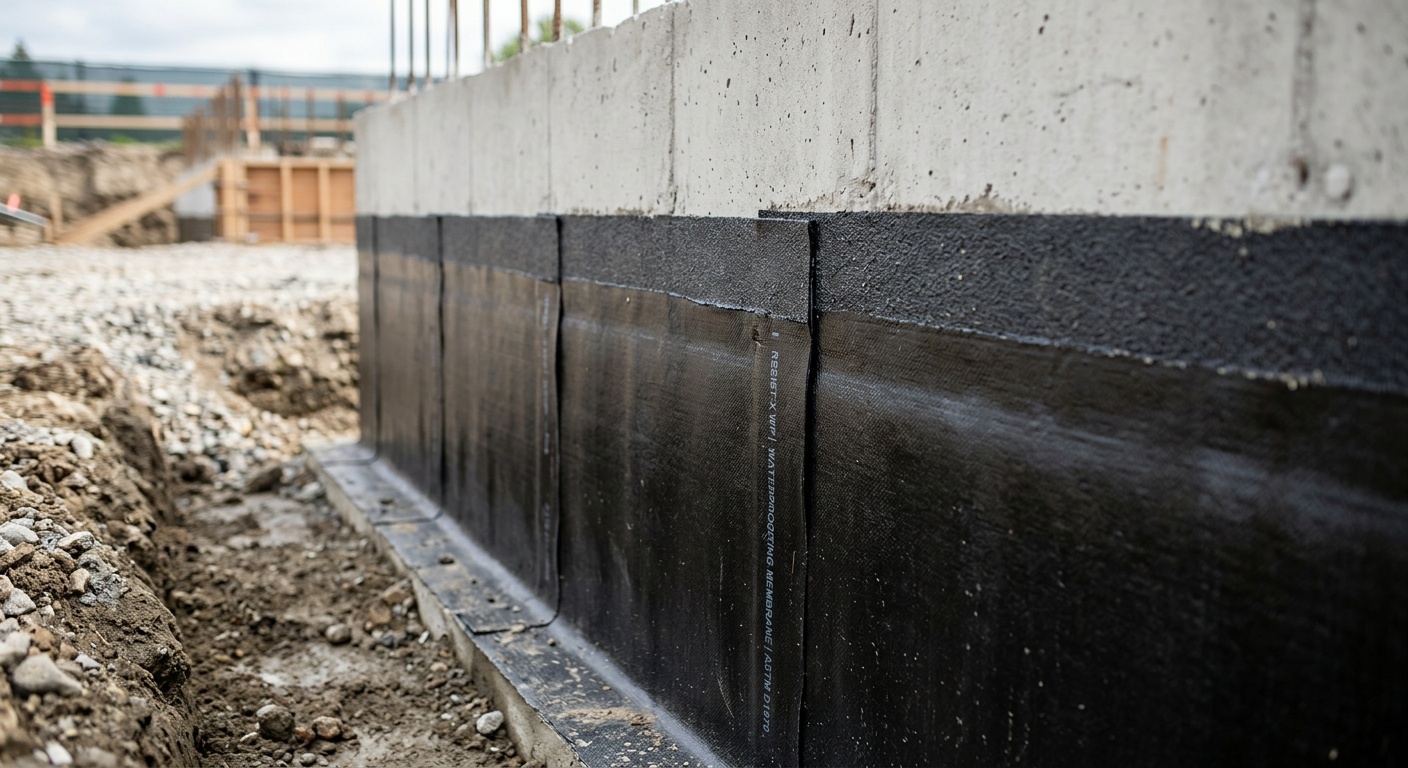
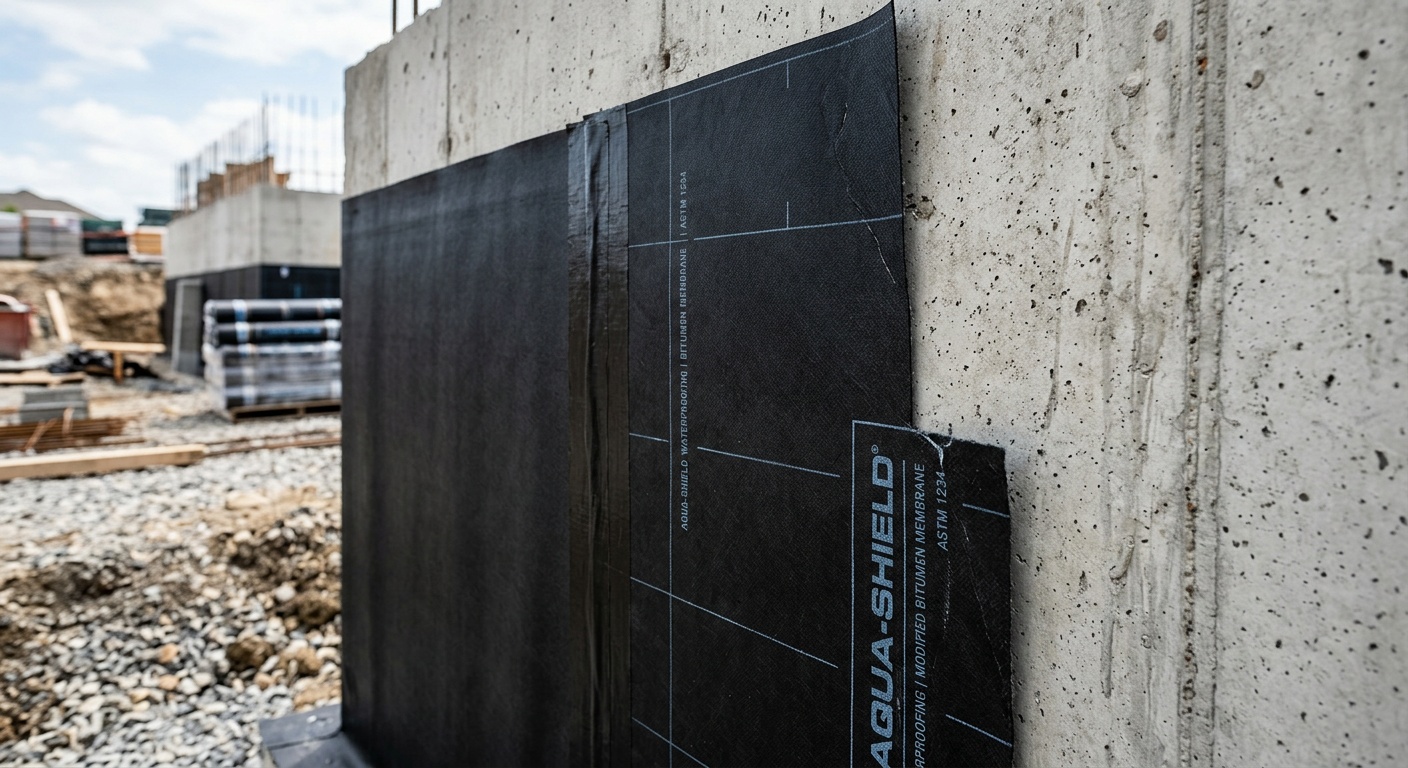
Exterior waterproofing addresses the problem at its source. Contractors excavate around the entire perimeter of the foundation, clean and repair the exterior wall surface, apply a waterproofing membrane (typically a rubberized asphalt or bentonite-based product), install a drainage layer, and bury a perforated weeping tile system that redirects groundwater away from the structure.
This is the most effective long-term solution and is often the right choice when: the foundation is structurally compromised, the home has experienced repeated flooding, or the property has serious drainage grading issues. However, it comes with significant disruption — landscaping, walkways, decks, and in some cases portions of driveways must be removed and replaced.
Realistic cost for a full exterior waterproofing job in Montreal: $20,000 – $45,000. Homes in older neighbourhoods with limited side-yard access or neighbouring attached walls can see costs exceed $55,000 when additional structural work is required.
Crack Injection: The Targeted Fix
For homes with one or two identifiable cracks causing water infiltration — rather than widespread seepage — crack injection is a precise, cost-effective solution. Polyurethane foam injection expands to fill the crack from the inside out, creating a flexible seal that accommodates minor ongoing movement. Epoxy injection creates a rigid, structural bond suitable for cracks that need reinforcement.
A single crack injection by a reputable Montreal contractor in 2026 typically costs $500 to $900 per crack, including a warranty inspection. Multiple cracks can be bundled for a better rate. This is not a DIY job — improper injection technique often pushes water into new pathways rather than resolving the problem.
Key Factors That Drive Costs Up or Down
Two quotes for the same type of waterproofing job can differ by $10,000 or more. Here’s what drives that variation:
- Foundation depth: Montreal bungalows with shallow foundations cost less to excavate than homes with 8-foot or 9-foot basement walls. Deeper foundations mean more excavation, more membrane, more drainage tile.
- Perimeter length: A small semi-detached home on a 20-foot lot costs significantly less to waterproof than a large detached home on a 50-foot lot.
- Soil conditions: Rocky substrate (common in areas near the Mont-Royal escarpment) dramatically increases excavation costs. Clay-heavy soil is easier to dig but harder to backfill properly.
- Access constraints: Urban Montreal properties with narrow side passages, fences, or adjacent buildings require hand-digging or micro-excavators — both significantly more expensive than standard equipment.
- Foundation material: Stone and brick foundations cost more to waterproof than poured concrete or concrete block, as the surface preparation is more complex.
- Degree of water damage already present: If there’s efflorescence, significant mortar erosion, or early structural movement, remediation adds to the bill.
- Permits: Some exterior waterproofing projects in Montreal require a building permit through the arrondissement, adding $300 – $800 and potentially delaying the project start.
Pro Tip: Always ask contractors specifically whether their quote includes backfill compaction, landscaping restoration, and permit fees. These are common sources of surprise add-ons that inflate the final invoice by $2,000 to $5,000.
Real Montreal Scenarios: Case Studies
Case Study 1 — Plateau-Mont-Royal Duplex, 1955 Construction
A homeowner in the Plateau noticed water seeping through three locations in the lower portion of the stone foundation wall after the spring 2025 melt. An inspection revealed degraded lime mortar joints and two hairline cracks in the poured concrete floor-wall junction. The recommended solution was a combination of tuckpointing (repointing the mortar joints), crack injection at both problem areas, and installation of a partial interior drainage channel along the affected wall with a new sump pump. Total cost: $11,400. The contractor provided a 15-year warranty on the drainage system and a 5-year warranty on crack injections. Eighteen months later, zero recurrence.
Case Study 2 — Laval Bungalow, 1968 Construction (Montreal Metropolitan Region)
A family in Laval — which falls within the Greater Montreal housing market — purchased a bungalow in 2024 and discovered chronic water infiltration during the first spring. The home had a poured concrete foundation with no original weeping tile system (common for homes of that era) and significant lateral cracking on two exterior walls. Full exterior waterproofing was recommended and completed in summer 2025: full perimeter excavation, application of a HDPE drainage membrane with protection board, installation of new 4-inch perforated weeping tile draining to daylight at the rear of the property, and full backfill with gravel drainage layer. Total cost: $28,700. This included removal and replacement of the rear deck footings. The homeowner received a 25-year transferable warranty — a significant selling point if they choose to sell.
Case Study 3 — NDG Townhouse, New Construction Issue
In a newer townhouse development in Notre-Dame-de-Grâce, a homeowner discovered in early 2026 that the original developer-applied bitumen spray coating on the exterior foundation had failed in two sections, causing targeted seepage in the mechanical room. Rather than full excavation, the contractor recommended targeted exterior excavation of just the two affected sections plus application of a crystalline waterproofing compound to the interior surface as a secondary barrier. Targeted approach cost: $6,200 — significantly less than a full exterior job, and appropriate given the localized nature of the failure.
Cost Comparison Table: Montreal Foundation Waterproofing Methods (2026)
| Method | Typical Cost Range | Disruption Level | Warranty (Typical) | Best For |
|---|---|---|---|---|
| Crack Injection | $400 – $1,200/crack | Very Low | 5 – 10 years | Isolated cracks, limited seepage |
| Interior Drainage System | $8,000 – $20,000 | Moderate (interior work) | 10 – 25 years | Widespread seepage, limited exterior access |
| Exterior Excavation | $15,000 – $45,000 | High (yard/landscape) | 20 – 30 years | Structural issues, no weeping tile, new builds |
| Sump Pump Only | $1,500 – $4,000 | Low | Pump: 3 – 7 years | Active water management, supplement to drainage |
| Full Combined System | $25,000 – $60,000 | High | 25 – 30 years (transferable) | Severe/chronic flooding, pre-sale remediation |
Cost Distribution by Method: Visual Breakdown
The following chart shows the approximate midpoint cost for each major waterproofing method as a proportion of the most expensive option (full combined system at $42,500 midpoint = 100%).
3 Common Challenges (and How to Overcome Them)
Challenge 1: Choosing Between Interior and Exterior Waterproofing
This is the question that trips up most Montreal homeowners. Interior systems are cheaper and less disruptive, but some contractors and engineers argue they don’t solve the root cause. Exterior systems address the source but cost 2–3x more and are often impractical in dense urban settings.
The strategic answer: It depends on your foundation type, the severity of infiltration, your budget, and your long-term plans for the property. For a home you plan to sell in five years with moderate seepage, a high-quality interior drainage system with a transferable warranty often makes more financial sense. For a property with structural cracks, no original weeping tile, and chronic flooding, exterior work is the right investment. Get a structural engineer’s assessment — not just a waterproofing company’s opinion — before committing to either option. An independent engineer assessment in Montreal typically costs $400 – $800 and is worth every dollar.
Challenge 2: Identifying Qualified, Trustworthy Contractors
The waterproofing industry in Quebec has a mixed reputation. Unlike roofing or electrical work, there’s no dedicated provincial licence category for waterproofing specialists — though contractors must hold a valid RBQ (Régie du bâtiment du Québec) licence. This means anyone with a general contractor’s licence can offer waterproofing services, creating significant variation in quality.
How to protect yourself: Always verify the contractor’s RBQ number through the Régie’s online directory. Request references from projects completed within the past three years in Montreal specifically — Montreal’s conditions differ from projects in warmer, drier regions. Ask whether they carry liability insurance of at least $2 million. Review the warranty terms carefully: a warranty is only as good as the company behind it, so look for businesses with 15+ years of operation in Quebec. And always get three written quotes — not just verbal estimates — before signing anything.
Challenge 3: Financing the Project
A $15,000 to $40,000 project is a significant financial commitment, and many homeowners put off waterproofing precisely because of sticker shock. The danger in delay is that water damage compounds: efflorescence leads to spalling, spalling leads to structural compromise, and a $12,000 drainage project can become a $45,000 foundation repair if left for three more years.
Financing options to explore in 2026: Some Montreal waterproofing companies offer in-house financing at 0% for 12–24 months. Home equity lines of credit (HELOCs) remain a practical option for homeowners with sufficient equity, particularly as interest rates have moderated through 2025–2026. Check with your arrondissement — several Montreal boroughs have local adaptation programs related to urban flooding that offer partial subsidies for drainage improvements. The provincial government’s Programme RénoVert, while primarily targeting energy efficiency, has been expanded to include some flood-risk mitigation measures. Finally, homeowner’s insurance sometimes covers sudden water damage events — always file a claim before starting remediation work, as after-the-fact claims are routinely denied.
Frequently Asked Questions
Is foundation waterproofing covered by home insurance in Montreal?
Generally, no — not for gradual water infiltration. Standard Quebec homeowner’s insurance policies cover sudden and accidental water damage (like a burst pipe) but explicitly exclude seepage, groundwater infiltration, and most forms of foundation-related water damage. However, if water damage occurred during a declared overland flooding event, some policies with overland water endorsements may provide partial coverage. Always review your policy with your broker before assuming coverage, and contact your insurer before starting any remediation work — not after — to ensure you preserve any claim rights you might have.
How long does foundation waterproofing last in Montreal’s climate?
A properly installed interior drainage system with a quality sump pump can effectively manage water for 20 to 30 years with basic maintenance (annual pump testing, periodic drain channel flushing). Exterior waterproofing membranes, when correctly applied and protected with drainage board, typically have a service life of 25 to 40 years. Crack injections have a shorter effective warranty of 5 to 10 years, as foundations continue to move slightly over time. The most important factor in longevity is the quality of installation and whether proper surface preparation was performed — a discount installation with inferior materials may fail in as little as 5 to 7 years in Montreal’s aggressive freeze-thaw environment.
Can I waterproof my own foundation to save money?
For minor surface treatments — applying hydraulic cement to small cracks, painting interior walls with a crystalline waterproofing compound, or improving exterior grading — DIY approaches are reasonable and can cost a few hundred dollars. However, for any serious water infiltration issue requiring drainage channel installation, crack injection, or exterior excavation, professional installation is strongly recommended. Improperly installed drainage systems can direct water to unintended areas, void structural warranties, and create new problems. The labour portion of a waterproofing job typically represents 40–55% of the total cost, so while the savings seem appealing, the technical complexity and consequences of error make professional installation the practical choice for most homeowners.
Your Foundation Protection Roadmap: Next Steps
You’ve now got a realistic, actionable understanding of what foundation waterproofing actually costs in Montreal — and more importantly, what drives those costs and how to make smart decisions for your specific situation. Here’s your practical action plan:
- Inspect and document now. Walk your basement perimeter today. Photograph any staining, efflorescence (white mineral deposits), cracks, or damp patches. Note whether water appears at the floor-wall junction or through the wall itself — this tells you whether the issue is hydrostatic pressure (groundwater) or surface water infiltration, which points toward different solutions.
- Get an independent engineer assessment. Before calling waterproofing contractors, invest $400–$800 in an independent structural assessment. This gives you a neutral diagnosis and a reference point against which to evaluate contractor recommendations.
- Collect three detailed written quotes. Specify that each quote must itemize labour, materials, permits, and warranty terms separately. Don’t compare lump sums — compare line items.
- Check RBQ licences and references. Verify every contractor through the RBQ online registry and speak directly with two or three past Montreal-area clients before signing.
- Time your project strategically. August through October is typically less competitive than the spring rush (April–June), often yielding better pricing and faster project scheduling.
The broader trend is clear: with Montreal’s climate continuing to produce more intense precipitation events and spring melt cycles — a pattern that hydrology experts at INRS (Institut national de la recherche scientifique) have confirmed is intensifying — foundation waterproofing is shifting from a reactive repair to a proactive investment that smart homeowners are building into their long-term property strategies.
Your foundation protects everything above it. The question isn’t really whether to waterproof — it’s whether you’ll do it on your timeline and budget, or on water’s timeline and terms.
What’s the current state of your basement? If you haven’t inspected it since last spring’s melt, this might be the moment to take that first walk downstairs — and start making informed decisions before the next thaw cycle arrives.