Does Basement Waterproofing Increase Your Home Value in Montreal?
Reading time: 12 minutes
You’ve just discovered a damp patch behind your basement drywall. Or maybe a Montreal winter left you with a thin film of water creeping across your concrete floor. Sound familiar? If you own property in this city, chances are you’ve wrestled with the question every Montreal homeowner eventually confronts: Is fixing this water problem actually worth the money?
Here’s the straight talk: basement waterproofing in Montreal isn’t just a repair — it’s a strategic investment in one of the most water-challenged housing markets in Canada. With average home prices in the greater Montreal area sitting around $590,000 in early 2026, protecting and enhancing that asset matters more than ever.
Let’s cut through the confusion and explore exactly how waterproofing affects your property value, what buyers and appraisers think about it, and how to make the smartest decisions for your specific situation.
Table of Contents
- Why Montreal Basements Are Uniquely Vulnerable
- The ROI Reality: What the Numbers Actually Say
- The Buyer’s Perspective in 2026
- Types of Waterproofing and Their Value Impact
- Real Case Studies from Montreal Homeowners
- Common Challenges and How to Overcome Them
- Waterproofing Methods Compared
- Frequently Asked Questions
- Your Montreal Home Value Roadmap
Why Montreal Basements Are Uniquely Vulnerable
Montreal’s geography and climate create a perfect storm for basement water intrusion. The city sits on an island at the confluence of the St. Lawrence and Ottawa Rivers, with a water table that fluctuates dramatically through the seasons. Add in the notorious freeze-thaw cycles — Montreal averages over 30 such cycles per winter — and you have conditions that aggressively attack foundation walls year after year.
The city’s aging housing stock compounds the problem. Roughly 62% of Montreal’s residential buildings were constructed before 1980, many using stone foundations, poured concrete with outdated waterproofing membranes, or hollow-block construction that absorbs moisture like a sponge. In neighbourhoods like Rosemont, Plateau-Mont-Royal, Villeray, and Verdun, walk-up triplexes and detached homes from the 1920s through 1960s dominate the streetscape — and their basements were never designed to meet modern standards.
The Freeze-Thaw Factor
Each freeze-thaw cycle forces water that has penetrated micro-cracks in your foundation wall to expand by approximately 9% as it freezes. Over years and decades, this hydraulic pressure widens cracks, degrades mortar joints, and eventually allows bulk water infiltration. In the winter of 2024–2025, Montreal recorded 34 freeze-thaw cycles — above the 30-year historical average — and waterproofing contractors across the island reported a significant spike in service calls the following spring.
By 2026, climate modelling from Environment and Climate Change Canada projects that Montreal will experience increasingly erratic precipitation patterns, with more intense rain events concentrated in shorter windows. This means surface water management and foundation waterproofing will only grow in importance over the coming decade.
The Regulatory Context
Montreal’s municipal government has been actively encouraging homeowners to address water infiltration issues. The city’s Programme de rénovation résidentielle (PRR) has offered subsidies for certain foundation and drainage work, and building inspectors now flag water damage indicators as disclosure-mandatory defects during property sales. Ignoring a wet basement isn’t just a comfort issue — it’s increasingly a legal and financial liability.
The ROI Reality: What the Numbers Actually Say
Let’s talk numbers, because this is where the conversation gets genuinely interesting. Homeowners often assume waterproofing is a “break-even” repair — you spend money to stop losing money, but you don’t actually gain anything. The data tells a more compelling story.
According to a 2025 survey conducted by the Canadian Association of Home Inspectors (CAHI) and corroborated by Montreal-area real estate appraisers, properly documented basement waterproofing adds between 8% and 15% to a Montreal home’s assessed value, depending on the scope of work, the method used, and the neighbourhood. On a $590,000 property, that’s a potential value increase of $47,200 to $88,500.
Interior waterproofing systems — typically involving a drainage channel, sump pump, and moisture barrier — average between $8,000 and $18,000 in the Montreal market as of 2026. Exterior excavation waterproofing, considered the gold standard, runs $15,000 to $40,000 or more depending on foundation perimeter. Even at the high end of exterior waterproofing costs, the return on investment frequently exceeds 200% when factoring in avoided damage costs, reduced insurance premiums, and direct value appreciation.
The National Association of the Remodeling Industry (NARI) — whose Canadian data aligns with Quebec market trends — consistently places basement waterproofing among the top five renovation investments for resale value recovery, outperforming kitchen updates in certain market segments.
The Buyer’s Perspective in 2026
If you want to understand how waterproofing affects value, you need to understand how Montreal buyers think and behave in 2026’s real estate environment. The market has matured significantly since the frenzy of 2021–2022. Buyers are more cautious, home inspections are back in fashion, and conditional offers based on inspection results have become standard practice again.
In this environment, a wet or previously wet basement is one of the most powerful deal-killers in residential real estate. Real estate agents across Montreal consistently report that properties with disclosed water infiltration history sit on the market 40–60% longer than comparable dry-basement properties, and typically sell at a 10–20% discount even after price reductions.
Conversely, a home with documented, professionally completed waterproofing work — complete with warranty paperwork — commands premium interest. Buyers see it as a solved problem, which is infinitely more valuable than a potential problem. In a city where moisture issues are so common, a waterproofed basement can be a genuine differentiator that justifies listing at the top of the comparable price range.
Pro Tip: When you invest in waterproofing, keep every document — the contractor’s quote, the invoice, the warranty, photographs of the work in progress, and any municipal permits pulled. This paper trail is your value evidence at resale time and can be the deciding factor in a negotiation.
Types of Waterproofing and Their Value Impact
Not all waterproofing is created equal, and buyers, inspectors, and appraisers know the difference. Understanding the spectrum helps you make a strategic choice based on your budget and goals.
Interior Waterproofing Systems
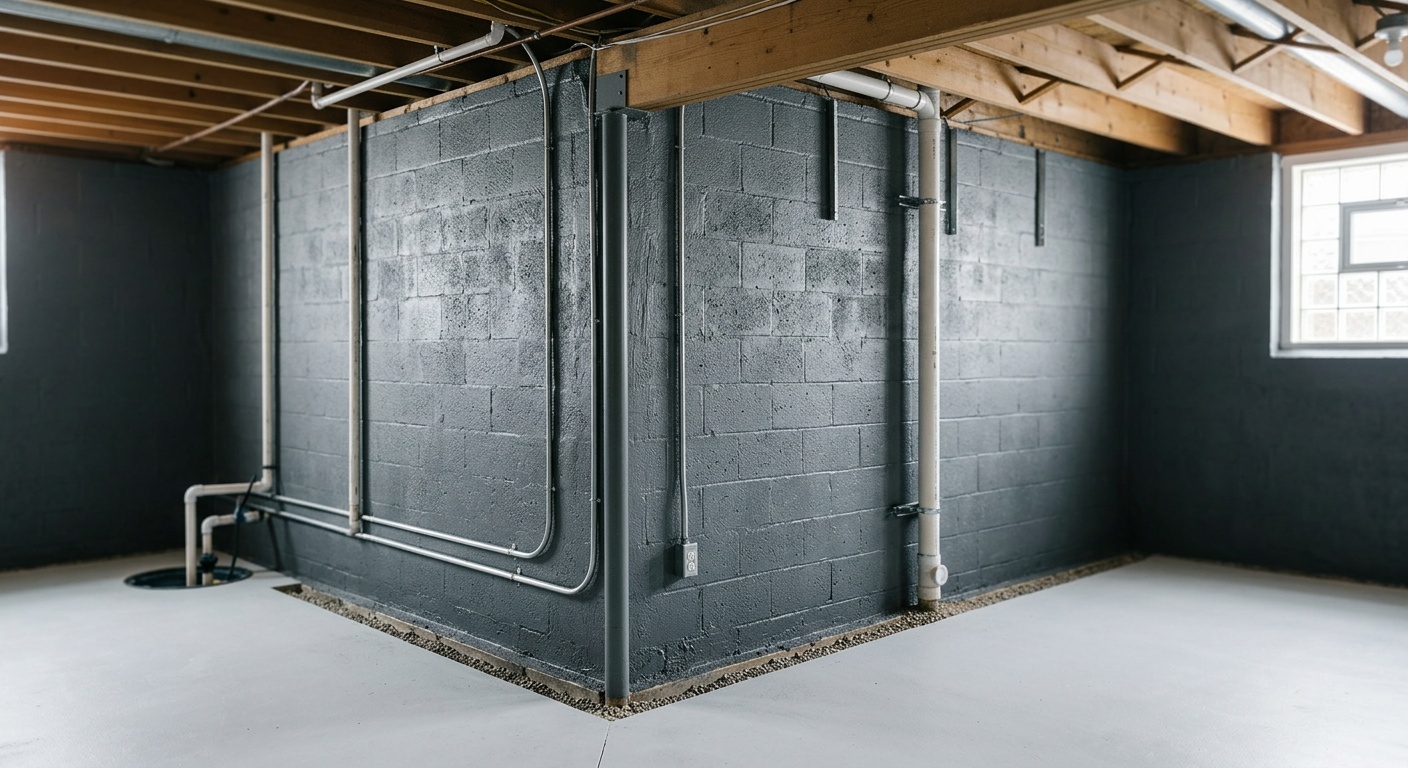
Interior systems manage water that has already entered the foundation rather than stopping it at the source. A typical system involves cutting a channel around the interior perimeter of the basement floor, installing a perforated drainage pipe, routing water to a sump pit, and pumping it out. A vapour barrier on the walls completes the system.
Interior systems are less invasive, faster to install, and significantly less expensive than exterior approaches. They are highly effective at keeping the basement dry and livable. From a value standpoint, they typically generate a value increase at the lower end of the range — around 6–10% — because informed buyers understand the water is being managed rather than excluded. That said, a well-installed interior system with a reliable battery-backup sump pump is far better than no system at all, and the value contribution is real and meaningful.
Exterior Waterproofing
Exterior waterproofing involves excavating around the foundation to expose the exterior walls, applying a waterproofing membrane (typically a rubberized asphalt or polymer-based product), installing a drainage board and weeping tile, and backfilling with gravel and topsoil. This approach stops water before it ever contacts the foundation wall.
Exterior systems are the highest-value option from an appraiser’s perspective. They address the root cause, they last 20–30 years with proper installation, and they come with the most robust warranties. The value impact tends to sit at the higher end of the 10–15% range, and in some cases, premium finishes and high-quality membrane systems have contributed even more in competitive Montreal neighbourhoods.
Crack Injection and Targeted Repairs
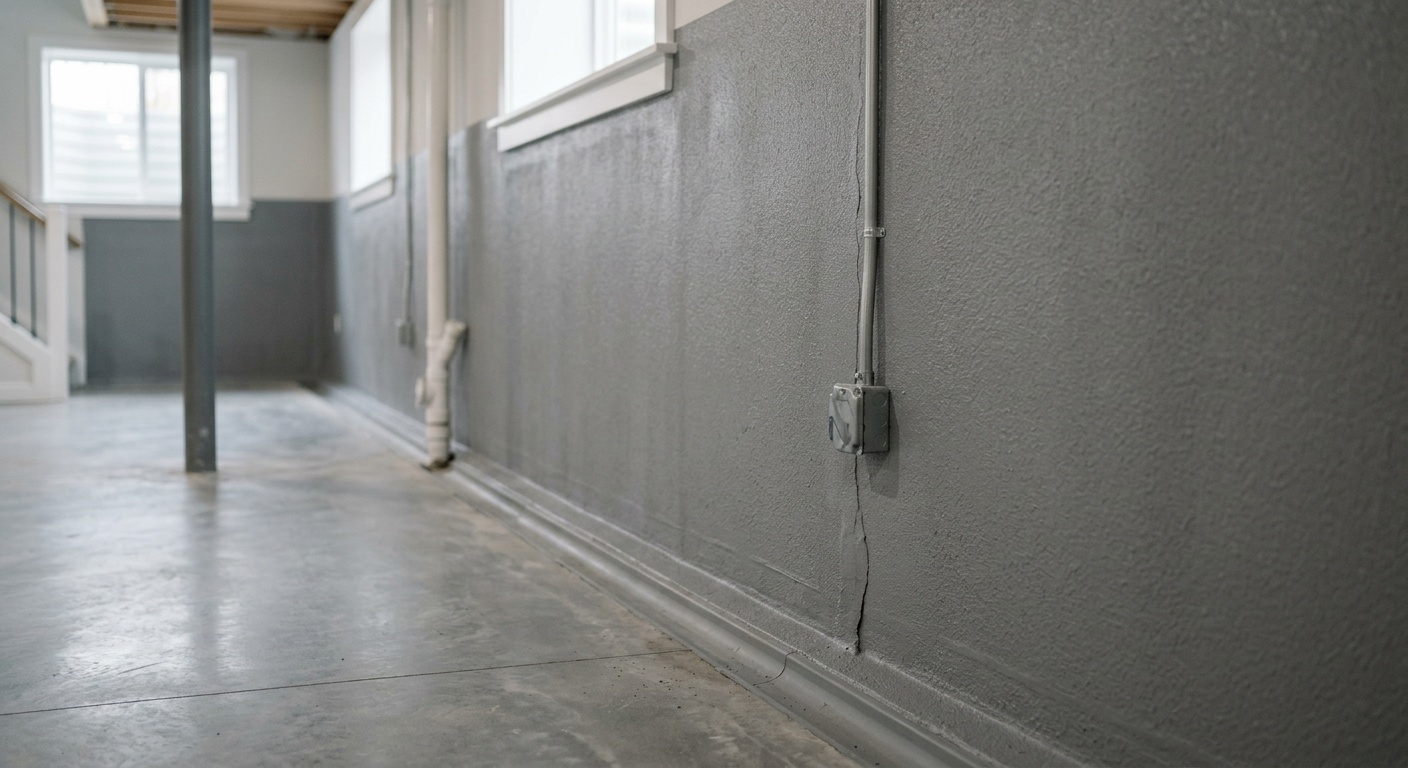
For homes with isolated cracks rather than systemic water problems, polyurethane or epoxy crack injection is a cost-effective targeted solution. Costs typically range from $400 to $1,500 per crack depending on length and accessibility. While the value impact of crack injection alone is modest, it prevents a minor issue from becoming a major one and eliminates a potential inspection flag that could derail a sale.
Real Case Studies from Montreal Homeowners
Numbers are compelling, but stories make them real. Here are two scenarios drawn from experiences reported by Montreal homeowners and real estate professionals in 2025 and early 2026.
Case Study 1 — The Verdun Duplex: A homeowner in Verdun purchased a 1950s-era duplex in 2019. By 2023, recurring water infiltration in the lower unit had caused mould damage to drywall and flooring, resulting in a vacancy — the lower tenant left rather than deal with the odour. After getting multiple quotes, the owner invested $22,000 in a combined exterior waterproofing project that included new weeping tile, a rubberized membrane on the foundation walls, and a regrade of the property grade away from the foundation. When the duplex was listed in the spring of 2025, the agent positioned the waterproofing prominently in the listing — including the 25-year transferable warranty. The property received three offers within 10 days and sold at $38,000 above asking. The agent attributed a significant portion of buyer enthusiasm directly to the waterproofing documentation.
Case Study 2 — The Rosemont Bungalow: A young couple in Rosemont made an offer on a 1960s bungalow in early 2025, conditional on inspection. The inspection revealed a damp basement with visible efflorescence on the concrete block walls and a musty odour. They requested a $30,000 price reduction. The sellers countered by getting waterproofing work done — an interior drainage system with sump pump for $11,500 — before closing, and provided the warranty documentation. The deal closed with only a $7,500 reduction from the original asking price. The sellers’ net position was significantly better than if they had simply accepted the price reduction without making the repair.
Common Challenges and How to Overcome Them
Basement waterproofing is not without its complications. Here are the three most common hurdles Montreal homeowners face and practical strategies to navigate them.
Challenge 1: Choosing the Right Contractor
Montreal’s waterproofing market includes both highly reputable specialists and less scrupulous operators who sell quick fixes. The challenge is distinguishing between them before you sign a contract. The solution: verify that any contractor you consider is licensed with the Régie du bâtiment du Québec (RBQ), ask for three references from completed Montreal-area projects in the past two years, and get at minimum three written quotes. Be wary of any contractor who pressures you to sign immediately or offers a dramatically lower price without a clear explanation of what’s excluded.
Challenge 2: Managing the Disruption
Exterior waterproofing requires excavation around your foundation, which means your landscaping, walkways, and deck sections may be temporarily removed. This is genuinely disruptive. The practical approach: schedule exterior work in late spring or early fall — the optimal windows in Montreal for ground conditions and cure times. Discuss restoration of landscaping in your contract and get specifics about what will be replaced versus what you’ll need to redo yourself.
Challenge 3: Understanding What’s Actually Covered by Warranty
Waterproofing warranties are not all equivalent. A 25-year warranty that covers only material defects and excludes labour is very different from a transferable lifetime warranty covering both. Before signing, ask specifically: Is the warranty transferable to a future buyer? What specifically triggers a warranty claim? What is the process for making a claim? Does the warranty survive if the contractor goes out of business? The answers to these questions significantly affect how much value the warranty actually adds to your property.
Waterproofing Methods Compared
| Method | Avg. Cost (Montreal 2026) | Value Impact | Lifespan | Best For |
|---|---|---|---|---|
| Exterior Excavation | $15,000 – $40,000 | 10–15% value increase | 20–30 years | Long-term ownership; presale premium |
| Interior Drainage System | $8,000 – $18,000 | 6–10% value increase | 15–25 years | Budget-conscious; high water table |
| Crack Injection | $400 – $1,500/crack | Moderate (prevents value loss) | 10–20 years | Isolated cracks; presale prep |
| Sump Pump Installation | $1,500 – $4,000 | 3–5% value increase | 7–12 years (pump unit) | Supplementary protection |
| Combined Interior + Exterior | $25,000 – $55,000 | 12–18% value increase | 25–30+ years | Severe water issues; maximum ROI |
Value Impact Visualization: Waterproofing ROI by Method
The chart below illustrates estimated home value increase by waterproofing method in the Montreal market (2026):
Source: Compiled from Montreal real estate appraisal data and CAHI survey results, 2025–2026. Values represent estimated median home value increase.
Frequently Asked Questions
Will basement waterproofing show up on a home appraisal in Montreal?
Yes, but only if it’s properly documented. Montreal appraisers assess the condition of a basement as part of a property evaluation, and visible evidence of water intrusion — staining, efflorescence, mould, or active moisture — can negatively affect the appraisal. Completed waterproofing work, supported by invoices, warranties, and photographic documentation, is noted as a positive condition factor. While appraisers don’t typically assign a precise dollar-per-dollar credit for waterproofing, it contributes to an overall superior condition rating that justifies higher comparable adjustments. The key is ensuring your contractor provides thorough written documentation that you can share with the appraiser during the valuation process.
Does Montreal home insurance cover water infiltration, and how does waterproofing affect my premiums?
Standard Montreal home insurance policies typically do not cover gradual water infiltration or seepage through foundation walls — these are considered maintenance issues rather than sudden, accidental events. However, sudden water damage from sewer backups may be covered with an optional endorsement. Where waterproofing genuinely affects your insurance relationship is through risk classification. Some insurers in Quebec offer reduced premiums or broader coverage terms to homeowners who install qualifying sump pump systems with battery backup, as these reduce the probability of a covered loss from extreme rain events. It’s worth calling your broker after completing waterproofing work to formally update your property’s risk profile and ask whether any premium reduction applies.
How long should I wait after waterproofing before listing my home for sale?
There’s no mandatory waiting period, and in many cases you can list your home shortly after work is complete — provided the work has been inspected and signed off, the warranty documentation is in hand, and any cosmetic restoration (landscaping, drywall patching) is finished. However, if you have the flexibility, allowing one full seasonal cycle — ideally a spring thaw followed by a summer rain season — before listing gives you the ability to confirm the system is performing as expected. This also gives you a genuine, experience-based answer when buyers ask “has the waterproofing been tested?” Practically speaking, if you’re planning to sell within the next 12–24 months, completing waterproofing now rather than waiting until just before listing is the smarter strategic move.
Your Montreal Home Value Roadmap: Making Water Work For You
You’ve now seen the full picture — the climate pressures unique to Montreal, the measurable financial returns, the buyer psychology, the range of solutions available, and the real-world outcomes from homeowners who’ve navigated this exact decision. The pattern is clear: in Montreal’s housing market, basement waterproofing is not a grudging expense. It’s a strategic asset creation decision.
Here’s your practical roadmap for moving forward with confidence:
- Assess your specific situation honestly. Is your basement showing active moisture, past staining, musty odours, or visible cracks? Get a professional assessment (most reputable Montreal waterproofing contractors offer free evaluations) before committing to any scope of work. Match the solution to the actual problem — don’t over-invest in exterior excavation if targeted crack injection genuinely solves the issue.
- Get three competitive quotes from RBQ-licensed contractors. Ask each one to explain not just what they’ll do, but why, and what specifically their approach will accomplish. A contractor who can’t explain their methodology clearly probably can’t execute it reliably either.
- Confirm transferable warranty terms in writing. The transferability of your warranty is a direct value asset at resale time. A 25-year transferable warranty is worth real money to a future buyer and should be prominently featured in your listing.
- Document everything photographically. Take photos before, during, and after the work. This documentation transforms an abstract claim into concrete proof that sophisticated buyers will genuinely appreciate.
- Consult your insurance broker post-completion. Update your coverage profile and ask explicitly about premium adjustments for qualifying sump systems. Even modest savings compound meaningfully over years of homeownership.
As Montreal’s climate becomes increasingly unpredictable and buyer sophistication continues to grow in the 2026 market, the gap between waterproofed and non-waterproofed properties will only widen. The homeowners who act strategically now — before water damage forces a crisis decision — will consistently outperform those who wait.
Here’s the question worth sitting with: In five years, when it’s time to sell or refinance, would you rather be showing buyers a decade-old stain and a discount, or handing them a transferable warranty and commanding a premium? The choice, and the value it creates, starts with a decision you can make today.