Step by Step Basement Waterproofing Process for Montreal Homeowners
Reading time: 14 minutes
Picture this: You head downstairs on a wet April morning—Montreal’s infamous snowmelt season is in full swing—and you’re greeted by the unmistakable smell of damp concrete, a suspicious puddle in the corner, and a creeping sense of dread. Sound familiar? If you own a home in Montreal, basement water problems aren’t just a possibility. They’re practically a rite of passage.
Montreal’s unique climate—freeze-thaw cycles that can swing 40°C within a single season, heavy spring rain, clay-heavy soil in many neighborhoods, and an aging housing stock—creates a perfect storm for basement moisture problems. According to a 2025 report by the Institut de la statistique du Québec, nearly 62% of Montreal homes built before 1980 have experienced some form of basement water infiltration. That’s not a minor inconvenience. Untreated, water damage can cost homeowners anywhere from $15,000 to $80,000 CAD in structural repairs, mold remediation, and foundation work.
But here’s the straight talk: waterproofing your basement doesn’t have to be overwhelming. With the right process, the right timing, and a clear understanding of Montreal-specific challenges, you can transform a damp liability into a dry, livable space—or at the very least, protect your home’s most critical structural asset.
This guide walks you through every step, from diagnosis to long-term maintenance, in plain language that actually helps you make smart decisions.
Table of Contents
- Why Montreal Basements Are Uniquely Vulnerable
- Step 1 – Diagnosing the Problem
- Step 2 – Choosing the Right Waterproofing Method
- Step 3 – Interior Waterproofing in Detail
- Step 4 – Exterior Waterproofing in Detail
- Step 5 – Drainage Systems and Sump Pumps
- Cost Comparison Table
- Common Challenges and How to Overcome Them
- Permits, Regulations, and Montreal-Specific Rules
- Frequently Asked Questions
- Your Dry Basement Roadmap: Next Steps
Why Montreal Basements Are Uniquely Vulnerable
Before jumping into solutions, it’s worth understanding why Montreal homes face such persistent basement water issues. This isn’t just about old houses—it’s about geography, climate, and urban infrastructure working against you simultaneously.
The Freeze-Thaw Factor
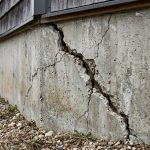
Montreal averages over 35 freeze-thaw cycles per year, according to Environment and Climate Change Canada’s 2025 regional climate data. Every time the temperature oscillates above and below 0°C, moisture in the surrounding soil expands and contracts. Over years and decades, this relentless pressure causes microscopic cracks in foundation walls—cracks that grow wider season after season.
In neighborhoods like Rosemont, Verdun, and Côte-des-Neiges, where homes date back to the 1920s through 1960s, original foundations were often constructed with poured concrete or stone—materials that were never designed to withstand 80 to 100 years of Montreal winters. By 2026, many of these homes are showing their age in a very wet way.
Clay Soil and Hydrostatic Pressure
Much of Montreal sits on clay-rich glacial soil that retains water exceptionally well. Unlike sandy or gravelly soil that drains quickly, clay soil holds moisture against your foundation walls for extended periods, creating hydrostatic pressure—the force of water pushing laterally against your foundation. When this pressure exceeds the structural capacity of the wall, water finds its way in through cracks, joints, and porous concrete.
A real-world example: A homeowner in NDG (Notre-Dame-de-Grâce) noticed seasonal seepage every spring for three consecutive years (2023–2025). After a professional assessment in early 2026, the diagnosis revealed clay soil pressing against a deteriorated exterior membrane that had failed after 40 years of service. The fix? A complete exterior waterproofing job combined with a new drainage tile system—a $22,000 investment that prevented what could have been a $55,000 foundation repair within five years.
Step 1 – Diagnosing the Problem Accurately
The most expensive mistake Montreal homeowners make is skipping straight to solutions without understanding the source of their water problem. Not all basement moisture is the same, and treating the wrong cause wastes thousands of dollars.
The Plastic Sheet Test
Here’s a simple diagnostic trick professionals use: tape a 30cm x 30cm piece of plastic sheeting tightly against your basement wall and leave it for 24–48 hours. If moisture collects on the inside of the plastic (between plastic and wall), water is coming through the wall from outside—a waterproofing problem. If moisture collects on the outside of the plastic (on the room-facing side), you’re dealing with interior condensation—a ventilation and humidity problem. These two issues require completely different solutions.
Common Sources of Basement Moisture in Montreal
- Foundation wall cracks: Vertical cracks often indicate settling; horizontal cracks signal serious structural pressure and require immediate professional attention.
- Window well flooding: Particularly common in older Montreal neighborhoods where grade slopes toward the home.
- Floor-wall joint seepage: Water enters at the cove joint (where floor meets wall)—the most common entry point in Montreal homes.
- Porous concrete block walls: Older homes often have concrete block (CMU) foundations that absorb water like a sponge.
- Failed sump pump or no sump system: Many older Montreal homes were built before sump pits were standard.
- Plumbing leaks: Often mistaken for seepage—always rule this out first.
Pro Tip: Before hiring anyone, document your moisture problem over multiple weather events. Note whether seepage worsens during rain, snowmelt, or only during specific seasons. This pattern data is invaluable for accurate diagnosis and helps you avoid being upsold on unnecessary work.
Step 2 – Choosing the Right Waterproofing Method
Once you’ve identified your moisture source, the next step is selecting the appropriate waterproofing approach. In Montreal, the two primary strategies are interior waterproofing and exterior waterproofing—each with distinct advantages, limitations, and cost profiles.
There’s an ongoing debate in the waterproofing industry about which approach is superior. The honest answer is: it depends on your specific situation, budget, and home. Neither method is universally “better.” What matters is matching the solution to the problem.
- Interior waterproofing manages water after it enters the foundation—redirecting it away before it causes damage. It’s less disruptive and more affordable, but it doesn’t stop water from entering the wall itself.
- Exterior waterproofing stops water at the source by creating a barrier outside the foundation. It’s the most comprehensive solution but also the most expensive and invasive—requiring excavation around the entire perimeter of your home.
- Crack injection is a targeted repair for specific cracks—typically using polyurethane or epoxy—and works well as a standalone fix when cracks are the sole entry point.
Step 3 – Interior Waterproofing in Detail
Interior waterproofing is the most common approach for Montreal homeowners dealing with moderate water infiltration, particularly through the cove joint or porous walls. It does not stop water from entering the wall but efficiently collects and redirects it before it can damage your interior.
The Interior Drainage Channel System
The cornerstone of interior waterproofing is a perimeter drainage channel (often called a French drain or interior weeping tile system) installed along the base of your foundation walls.
Here’s the step-by-step process:
- Remove concrete along perimeter: A contractor jackhammers a channel approximately 30–45cm wide along the interior perimeter of the basement floor, adjacent to the foundation walls.
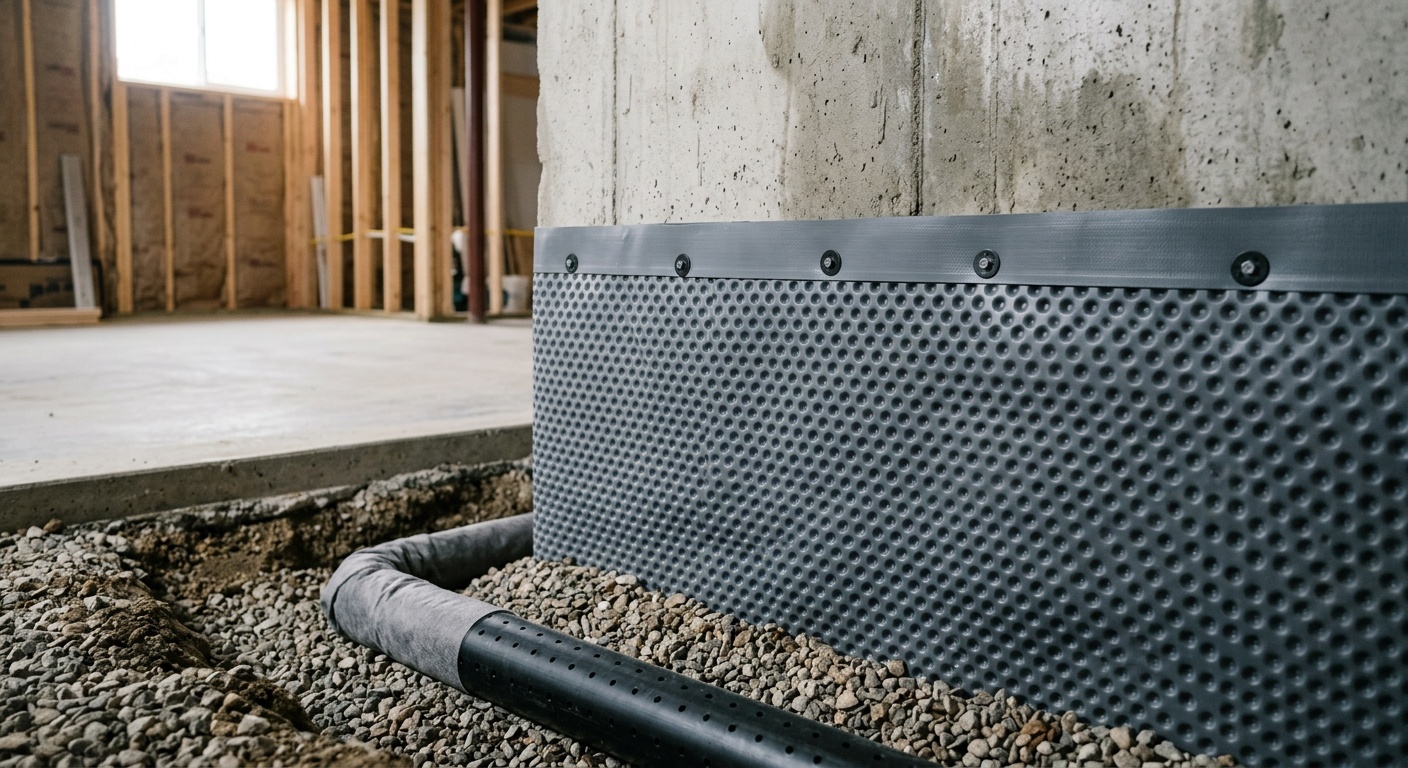
- Install drainage pipe: A perforated PVC pipe is laid in the channel, sloped toward the sump pit location. This pipe collects water that seeps through the wall-floor joint.
- Add drainage board: A dimple mat or drainage board is often installed against the lower section of the foundation wall to channel wall seepage downward into the pipe system.
- Install sump pit: A sump pit is excavated at the lowest point (or corner) of the basement, sized appropriately for your home’s water volume.
- Cover with concrete: The channel is refilled with gravel and covered with new concrete, leaving only the sump pit accessible.
- Install sump pump: A submersible sump pump is placed in the pit with a discharge line that carries water away from the home’s foundation.
Case Study: A homeowner in Pointe-Saint-Charles had her 1940s row house basement flooding every spring for seven years. In March 2026, she invested $9,500 in a full interior perimeter drainage system with a dual sump pump setup (primary + battery backup). The spring melt of 2026—one of the wettest on record for Montreal—passed without a single drop of water in her basement. Total disruption time: four days of work, minimal excavation outside the home.
Step 4 – Exterior Waterproofing in Detail
Exterior waterproofing is the gold standard for comprehensive basement protection. It addresses the root cause—water accumulating against your foundation—rather than managing water after infiltration. It is, however, a significant undertaking.
The Exterior Waterproofing Process Step by Step
- Excavation: The contractor excavates soil around the entire perimeter of your home down to the base of the foundation (typically 6–10 feet deep in Montreal). This requires removing landscaping, patios, walkways, and anything else adjacent to the foundation walls.
- Foundation cleaning: The exposed foundation walls are pressure-washed and cleaned thoroughly to remove old membrane material, efflorescence, and debris.
- Crack repair: Any visible cracks are repaired with hydraulic cement or polyurethane injection before applying the waterproofing membrane.
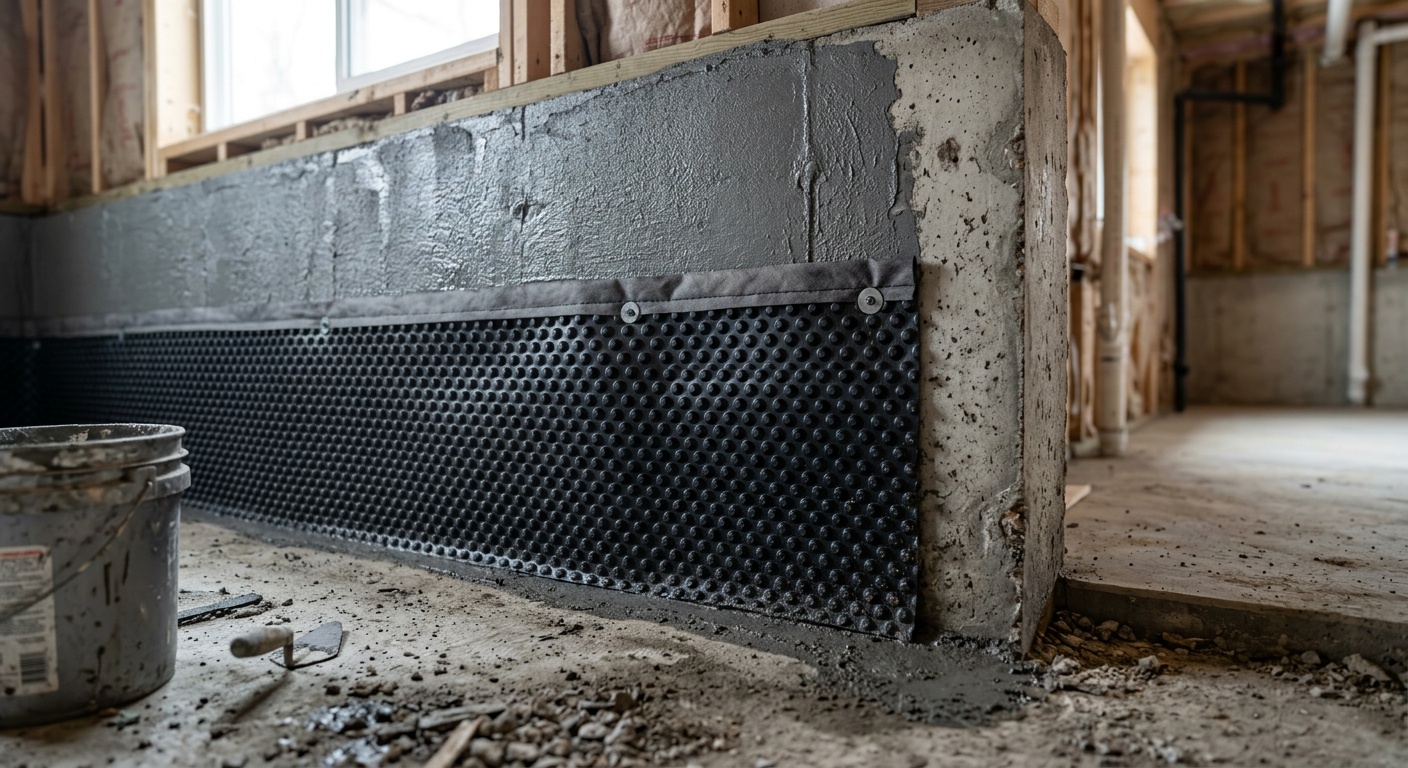
- Waterproofing membrane application: A rubberized asphalt or polymer-modified bitumen membrane is applied to the exterior foundation walls in two or more coats. Many Montreal contractors now use spray-applied elastomeric membranes that provide seamless coverage.
- Drainage board installation: A dimple drainage board is applied over the membrane to protect it during backfill and to channel water downward toward the weeping tile.
- Weeping tile installation: New perforated drainage pipe (weeping tile) is installed at the base of the foundation, wrapped in filter fabric to prevent soil clogging, and sloped toward a daylight exit point or sump connection.
- Backfill: The excavation is backfilled with gravel near the foundation (for drainage) and then native soil, followed by restoration of any disturbed landscaping or hardscaping.
The entire process typically takes 5 to 10 business days for an average Montreal detached home, depending on foundation depth and accessibility. Attached or semi-detached homes in dense urban neighborhoods like the Plateau or Mile-End present additional complexity because excavation access is limited on shared-wall sides.
Step 5 – Drainage Systems and Sump Pumps
Regardless of whether you choose interior or exterior waterproofing, a properly functioning drainage system is the backbone of your moisture management strategy. In Montreal’s climate, a sump pump isn’t optional—it’s essential.
Sump Pump Selection and Installation
When selecting a sump pump for a Montreal home, consider these key factors:
- Pump capacity (GPH/GPM): For average Montreal homes experiencing moderate seepage, a pump rated at 2,000–3,000 gallons per hour is typically sufficient. Homes in low-lying areas or with high water tables may require higher-capacity units.
- Pedestal vs. submersible: Submersible pumps are preferred for Montreal basements—they run quieter, handle debris better, and are less prone to freezing issues.
- Battery backup system: Montreal experiences significant spring storms that can knock out power during the exact moments when your sump pump is working hardest. A battery backup system (or a water-powered backup as an alternative) is not a luxury—it’s a necessity.
- Discharge line placement: Quebec municipal regulations (and City of Montreal bylaws) prohibit discharging sump water into the sanitary sewer system. Discharge must be directed to the storm sewer, a dry well, or at least 3 meters from the foundation on a sloped grade.
Pro Tip: In 2025, the City of Montreal expanded its basement backwater valve subsidy program, offering homeowners up to $2,500 CAD toward the installation of a backwater valve—a device that prevents city sewage from backing up into your basement during heavy rainfall events. As of 2026, this program remains active. Check with Service de l’eau de Montréal for current eligibility criteria before starting any waterproofing project.
Cost Comparison: Montreal Basement Waterproofing Methods (2026)
| Method | Average Cost (CAD) | Disruption Level | Effectiveness | Warranty (Typical) |
|---|---|---|---|---|
| Crack Injection (Polyurethane) | $500–$1,500 per crack | Minimal | High (isolated cracks) | 5–10 years |
| Interior Drainage System | $8,000–$18,000 | Moderate (interior work) | High (water management) | 10–25 years |
| Exterior Waterproofing (Full) | $20,000–$50,000+ | High (excavation required) | Very High (source prevention) | 20–30 years |
| Sump Pump Installation | $1,500–$4,500 | Low–Moderate | High (when combined with drainage) | Pump: 5–10 years |
| Backwater Valve | $1,000–$3,000 | Low | High (sewer backup prevention) | Varies |
Waterproofing Method Effectiveness Rating (Montreal Conditions)
Common Challenges and How to Overcome Them
Challenge 1: Shared Walls in Semi-Detached and Row Houses
Montreal’s urban fabric is dominated by duplexes, triplexes, and row houses—especially in boroughs like Rosemont, Plateau-Mont-Royal, and Hochelaga-Maisonneuve. Exterior waterproofing on a shared foundation wall is legally and logistically complex. You cannot excavate on your neighbor’s property without their consent, and in some cases, shared-wall foundations require a co-ownership agreement or joint repair approach.
Solution: In these scenarios, interior waterproofing combined with targeted crack injection becomes the most practical option. Work with a waterproofing contractor who has specific experience with Montreal multi-family housing. Some contractors specialize in these urban configurations and can achieve excellent results without touching the shared wall side.
Challenge 2: Contractor Vetting in a Crowded Market
The Montreal waterproofing market has grown significantly. A 2025 analysis by the Association des professionnels de la construction et de l’habitation du Québec (APCHQ) noted a 38% increase in registered waterproofing contractors in the Greater Montreal area between 2020 and 2025—which also means more unqualified operators entering the field. Stories of homeowners paying $15,000+ for interior drainage systems that failed within 18 months are unfortunately common.
Solution: Always verify that your contractor:
- Holds a valid RBQ (Régie du bâtiment du Québec) license in the appropriate category (licence sous-catégorie 1.2 or 1.3 for foundation work).
- Provides a written warranty that is transferable to future owners (this matters enormously for resale value).
- Carries liability insurance and CNESST coverage for workers.
- Provides a detailed written scope of work—not just a verbal quote.
- Has verifiable reviews through Google, Houzz, or HomeStars, ideally with Montreal-area references you can actually call.
Challenge 3: Timing and Seasonal Constraints
Exterior waterproofing in Montreal cannot be done when the ground is frozen—typically November through March. Interior work can proceed year-round but is best scheduled outside of spring melt season (late March through May) when basements are actively managing water and scheduling backlogs peak. Many homeowners wait until they have an active emergency, which leads to rushed decisions and premium emergency pricing.
Solution: Schedule your waterproofing assessment in late summer or early fall. This allows you to plan, obtain multiple quotes, and schedule exterior work during the September–October window—optimal conditions for excavation and membrane application, before the ground freezes.
Permits, Regulations, and Montreal-Specific Rules
Many Montreal homeowners don’t realize that basement waterproofing work—particularly exterior excavation and interior drainage system installation—may require a building permit from your borough. Requirements vary by borough; Outremont, Westmount (which has its own municipal authority), and Saint-Laurent each have slightly different thresholds for what triggers permit requirements.
As a general guideline for 2026:
- Crack injection and minor interior coating work: Typically no permit required.
- Interior drainage system with new sump pit: Check with your borough—some require a permit for structural floor modifications.
- Exterior excavation: Almost always requires a permit, plus locate services must be called (call Info-Excavation at 1-800-663-9228) to identify underground utilities before any digging begins.
- Backwater valve installation: Usually requires a plumbing permit and must be done by a licensed plumber.
Your contractor should handle permit applications as part of their service. Be wary of any contractor who suggests skipping permits to “save time”—this can void your home insurance and create liability issues when you sell.
Frequently Asked Questions
How long does basement waterproofing last in Montreal’s climate?
The lifespan depends heavily on the method used and the quality of installation. A professionally installed exterior waterproofing system with a quality elastomeric membrane typically lasts 20 to 30 years in Montreal conditions before requiring reassessment. Interior drainage systems, when properly installed with quality materials, are often warrantied for 10 to 25 years. Polyurethane crack injections generally hold well for 5 to 10 years but should be monitored. The critical variable isn’t the method itself—it’s the quality of the contractor and materials. A $25,000 exterior job done poorly will fail faster than a $12,000 interior system done by a reputable specialist.
Can I waterproof my Montreal basement myself to save money?
For minor issues—applying hydraulic cement to a hairline crack, improving grading around your foundation, or cleaning and sealing window wells—DIY is absolutely feasible and can be effective. However, for any significant waterproofing work (drainage system installation, exterior excavation, sump pit creation), professional installation is strongly recommended. The risks of DIY in this domain are significant: improper slope on drainage pipes leads to standing water and mold, incorrect membrane application leaves gaps, and excavation without proper shoring can be genuinely dangerous. More practically, most insurance companies and future home buyers expect professionally warranted waterproofing systems—a DIY job, however well-intentioned, won’t provide that documentation.
Will basement waterproofing increase my Montreal home’s resale value?
Yes—and in Montreal’s 2026 real estate market, meaningfully so. A 2025 RE/MAX Québec survey found that homes with documented, warranted waterproofing systems sold for 3–7% more on average than comparable homes without, and spent significantly fewer days on the market. Buyers in Montreal are increasingly sophisticated about basement conditions, and a dry, inspected basement with a transferable warranty is a genuine selling point. More importantly, a home inspector who identifies active water infiltration during the pre-purchase inspection will either kill the sale entirely or result in significant price renegotiation—often far exceeding the cost of having proactively waterproofed the space.
Your Dry Basement Roadmap: Next Steps
You now have a comprehensive picture of what basement waterproofing in Montreal actually involves—the diagnosis, the methods, the costs, the regulations, and the pitfalls. Let’s condense that into a clear action plan you can start implementing this week.
- Conduct your own initial assessment. Use the plastic sheet test described above. Document moisture patterns over the next rain or snowmelt event. Take photos and note exact locations, quantities, and timing. This 20-minute investment will make every subsequent conversation with contractors dramatically more productive.
- Check subsidy eligibility immediately. Before spending a dollar, contact the City of Montreal and your borough office about the backwater valve subsidy and any other available programs. In 2026, provincial and municipal programs have expanded—free money is available, but it requires you to apply before work begins, not after.
- Get three detailed quotes—not estimates. A quote is a document with line-item scope of work, materials specified, warranty terms, and a fixed price. An estimate is a number on a business card. Only compare quotes, and verify RBQ licensing for each contractor before meeting.
- Schedule fall, not spring. If your situation is not an active emergency, resist the panic-driven urge to book the first available contractor in April. Plan for September–October exterior work or November–February interior work when scheduling pressure is lower and you’ll get better contractor attention.
- Build a long-term maintenance plan. Waterproofing isn’t a one-and-done solution. Schedule annual sump pump testing, check your backwater valve every spring and fall, monitor foundation walls for new cracking annually, and maintain proper exterior grading. A small maintenance habit now prevents the $40,000 emergency later.
Montreal’s housing stock is aging, its climate is intensifying, and basement water problems are not going to become less common on their own. The homeowners who act strategically—diagnosing accurately, choosing the right method, hiring qualified professionals, and maintaining their systems—are the ones who protect both their families and their most significant financial asset.
As climate models project continued increases in intense precipitation events across Québec through 2027 and beyond, a dry basement isn’t just a comfort issue—it’s a climate resilience strategy for your home.
So here’s the question worth sitting with: Is your basement already showing early warning signs you’ve been ignoring? The best time to address basement water in Montreal was five years ago. The second best time is right now—before the next spring melt reminds you in the most expensive way possible.