Waterproofing Membrane Types Explained for Quebec Climate Conditions
Reading time: 9 minutes
Ever stood in your basement after a March thaw, watching water seep through a hairline crack you swore wasn’t there last fall? If you’re a Quebec homeowner or contractor, you already know that our province doesn’t just have weather—it has moods. Fifty freeze-thaw cycles a winter, humid summers, and spring melts that can dump weeks’ worth of rain in days. Choosing the wrong waterproofing membrane here isn’t a minor oversight; it’s an expensive mistake waiting to surface, quite literally, through your foundation walls.
Table of Contents
- Why Quebec’s Climate Changes the Waterproofing Equation
- The Main Membrane Categories
- Sheet Membranes vs. Liquid-Applied: A Practical Comparison
- Performance Snapshot: How Membranes Stack Up
- Common Challenges and How to Overcome Them
- Real-World Scenarios from Montreal to Saguenay
- Frequently Asked Questions
- Your Roadmap Forward
Why Quebec’s Climate Changes the Waterproofing Equation
Let’s be honest: a waterproofing product that performs beautifully in Arizona might crack apart in Trois-Rivières by its second winter. According to Environment and Climate Change Canada’s 2025 regional data, Quebec experiences an average of 55 to 65 freeze-thaw cycles annually, and in 2026, forecasters at Ouranos (Quebec’s climate consortium) are projecting even more volatile shoulder-season swings due to warming trends affecting the St. Lawrence Valley.
That constant expansion and contraction of moisture within concrete and soil puts enormous stress on any waterproofing system. A membrane needs to remain flexible at -30°C and still resist UV degradation and ponding water during humid, 30°C Julys. That’s a tall order, and it’s exactly why “one-size-fits-all” advice from generic home improvement blogs often falls flat for Quebec builds.
Pro Tip: Always ask your contractor for the membrane’s documented low-temperature flexibility rating (often tested to CGSB or ASTM D1970 standards) before signing off on a foundation waterproofing contract.
The Main Membrane Categories
Broadly, waterproofing membranes fall into a few families. Understanding these isn’t about memorizing chemistry—it’s about knowing which tool fits which job.
Sheet Membranes (Self-Adhered and Torch-Applied)
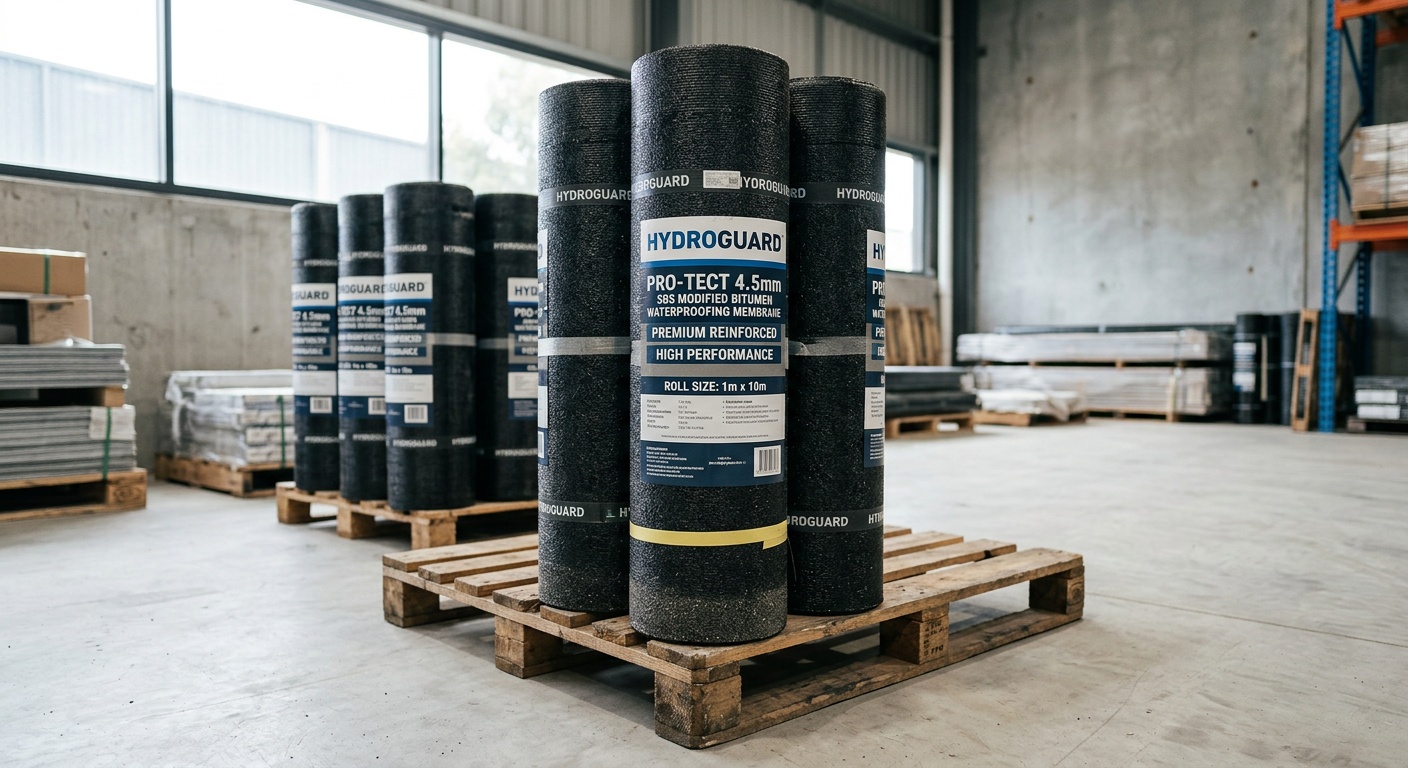
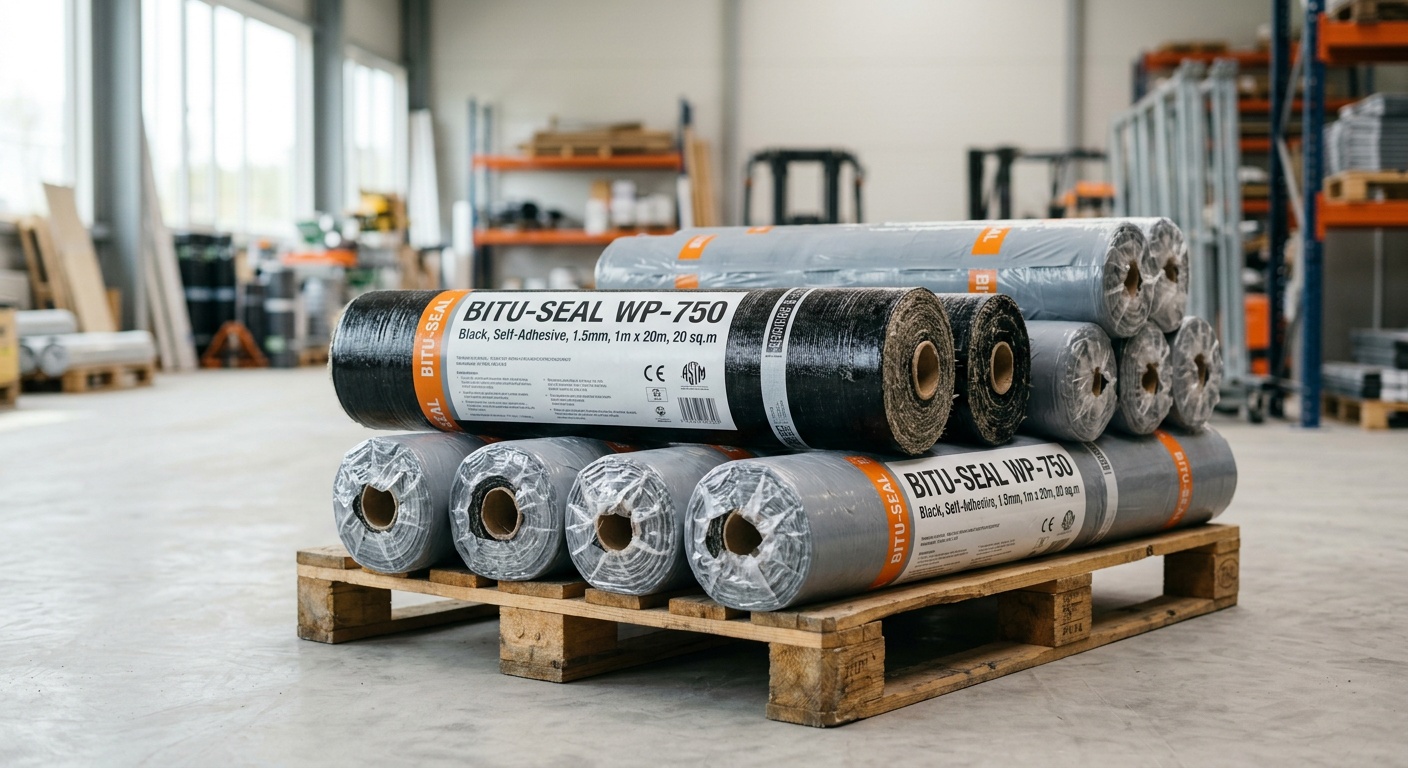
These are pre-manufactured rolls, typically rubberized asphalt or modified bitumen, applied directly to foundation walls or roof decks. Self-adhered versions have become the go-to for residential foundations across the Montreal and Quebec City metro areas because they don’t require an open flame during installation—a real safety advantage in tight urban lots.
Liquid-Applied Membranes
Sprayed or roller-applied polyurethane, acrylic, or bitumen-based coatings that cure into a seamless barrier. These shine on complex geometries—think foundations with pipe penetrations, corners, or irregular surfaces where a sheet membrane would need excessive seaming.
Sheet-Metal and Bentonite Clay Systems
Less common but still relevant for heritage buildings in Old Quebec or Old Montreal, bentonite panels swell when wet, self-sealing against minor cracks. They’re forgiving of imperfect substrate prep, which matters when you’re working around 200-year-old stone foundations that were never poured to modern tolerances.
Sheet Membranes vs. Liquid-Applied: A Practical Comparison
Here’s the straight talk: neither category is universally “better.” It depends on your building type, budget, and how much surface irregularity you’re dealing with.
| Metric | Sheet Membrane | Liquid-Applied |
|---|---|---|
| Avg. Cost per m² (2026 CAD) | $18–$28 | $22–$35 |
| Installation Temp Range | 4°C to 35°C | 2°C to 32°C |
| Expected Lifespan | 20–30 years | 15–25 years |
| Seam Vulnerability | Moderate (overlap-dependent) | Low (seamless application) |
| Best For | Flat, large-surface foundations | Complex shapes, retrofits |
Performance Snapshot: How Membranes Stack Up in Freeze-Thaw Resistance
Based on aggregated 2025–2026 field performance surveys from Quebec waterproofing contractors, here’s a simplified comparison of freeze-thaw durability ratings (out of 100, higher is better):
Notice how PVC and rubberized asphalt sheet membranes lead the pack? That’s largely because their molecular structure retains elasticity even in deep-freeze conditions, a critical factor when your foundation is essentially breathing in and out with every cold snap.
Common Challenges and How to Overcome Them
Challenge 1: Improper Surface Prep on Older Foundations
Many homes in Quebec’s older boroughs—Verdun, Limoilou, and parts of Sherbrooke—sit on parged stone or uneven poured concrete from decades past. Applying any membrane over an unprepped, damp, or flaking surface guarantees premature failure. Solution: Insist on a moisture-content test (ideally under 4% by weight) and mechanical surface grinding before any membrane touches the wall.
Challenge 2: Installing During Quebec’s Narrow Weather Window
Most membranes require temperatures above freezing to cure or adhere properly, which squeezes your realistic installation season into roughly May through early October. Contractors who rush installations in late October risk incomplete adhesion. Solution: Schedule foundation waterproofing projects in early summer, and build in a 5–7 day weather buffer in your contract.
Challenge 3: Ignoring Drainage Integration
A membrane alone doesn’t solve water problems—it needs to work alongside a functioning weeping tile system and proper grading. I’ve seen homeowners spend $12,000 on premium membrane only to have water pool against the foundation because nobody addressed the drainage. Solution: Always pair membrane installation with a drainage assessment; it’s the difference between a system and a Band-Aid.
Real-World Scenarios from Montreal to Saguenay
Consider a semi-detached home in Rosemont built in 1962. The owners noticed efflorescence (that white chalky residue) on their basement walls every spring. A contractor diagnosed hydrostatic pressure combined with a degraded asphalt-based dampproofing coat—not a true membrane at all, just a thin coating that had been mislabeled as “waterproofing” by the original builder. Switching to a self-adhered rubberized asphalt sheet membrane paired with new weeping tile resolved the issue within one wet season.
Contrast that with a 2025 commercial retrofit in Chicoutimi, where a liquid-applied polyurethane system was chosen specifically because the below-grade wall had multiple mechanical penetrations for utility lines. Sheet membrane would have required a dozen custom cut-outs and seals; the liquid system simply flowed around each penetration, curing into one seamless barrier. Eighteen months later, zero reported leaks despite a particularly harsh Saguenay winter with recorded lows near -35°C.
A third case, this time in Gatineau, involved a heritage stone foundation where standard membranes weren’t compatible with the substrate’s breathability requirements. The solution was a bentonite clay panel system, which allowed the stone to retain its natural vapor permeability while still blocking bulk water intrusion—a nuanced trade-off that a generic “best membrane” ranking would have completely missed.
Frequently Asked Questions
What’s the single biggest mistake Quebec homeowners make with waterproofing membranes?
Assuming dampproofing and waterproofing are the same thing. Dampproofing coatings resist moisture vapor but can’t withstand hydrostatic pressure from groundwater—a real risk given Quebec’s high water tables in regions like the Monteregie. If your foundation faces standing water or seasonal flooding, you need a true membrane system, not just a sprayed-on coating.
How much should I budget for foundation waterproofing membrane in 2026?
For a typical 1,500 to 2,000 square foot foundation perimeter in the Quebec City or Montreal region, expect to pay between $8,000 and $18,000 CAD depending on excavation depth, membrane type, and whether drainage work is included. Prices have risen roughly 6-8% since 2024 due to material and labor cost increases across the construction sector.
Do I need a permit for waterproofing membrane installation in Quebec?
Generally, if the work stays within existing excavation and doesn’t alter structural elements, most municipalities don’t require a permit. However, always verify with your local municipal building department, since bylaws in cities like Laval or Longueuil can differ from rural MRC requirements, especially regarding excavation depth near property lines.
Your Roadmap Forward
Waterproofing your foundation isn’t a one-and-done purchase decision—it’s a system-level commitment that has to account for Quebec’s uniquely punishing freeze-thaw rhythm. As climate variability increases through 2026 and beyond, membranes with proven low-temperature flexibility will only become more essential, not less.
- Step 1: Get a moisture and substrate assessment before choosing any membrane type.
- Step 2: Match the membrane category to your foundation’s geometry and age—don’t force a generic solution onto a unique structure.
- Step 3: Always pair membrane work with drainage evaluation; they’re partners, not substitutes.
- Step 4: Schedule installation within Quebec’s realistic May-to-October window, with weather contingencies built in.
- Step 5: Request documented freeze-thaw and flexibility test data from your contractor before signing any contract.
So, what’s it going to be—another spring spent mopping up preventable water damage, or a foundation system built to actually survive the Quebec winters we all know are coming? The membrane you choose today is the difference between a dry basement in 2036 and a costly renovation redo. Choose deliberately.